Lamego: City of Portugal's Origins and the Sanctuary of Remédios
Lamego in brief
Lamego is a Douro city in the district of Viseu, about 10 km from Peso da Régua and within the Douro Demarcated Region. The city has 11,165 inhabitants (2021) and is the seat of a 165 km² municipality with 18 parishes and 24,315 inhabitants. It is also the seat of the diocese of Lamego, the only Portuguese diocese that does not correspond to a district capital, which helps explain the number of churches, convents and episcopal palaces in the historic centre.
This guide brings together the essentials for planning a visit: history, monuments, nature, food and drink, festivals, how to get there and where to stay, with links to the portal's pages on each topic.
A little history
Lamego is a very ancient city: it dates back to Roman times and is believed to have been the capital of the civitas of the Colarni. It was a bishopric as early as the Visigothic period and was definitively reconquered from the Moors on 29 November 1057 by Ferdinand the Great of León. For centuries it was a busy market and trading town; the rua Nova was a merchants' quarter and the city had a Jewish community, whose synagogue tradition places next to the Portas do Sol, in today's Castelo neighbourhood.
In 1835, in Mouzinho da Silveira's administrative reform, Lamego was at one point expected to become a district capital, but that same year the seat went to Viseu, as it was a more central location.
The Cortes de Lamego: between tradition and history
According to tradition, it was in Lamego (the Igreja de Santa Maria de Almacave is the place associated with it) that, around 1143, D. Afonso Henriques was acclaimed the first king of Portugal, at the so-called Cortes de Lamego (Assembly of Lamego). It is, however, a tradition: modern historiography, following Alexandre Herculano, considers that the document describing these Cortes, known only from a 17th-century copy, is apocryphal and that the assembly never took place. Even so, the episode remains one of the symbols of Lamego's past and is evoked on the city's tourist trails.
What to see in Lamego
The main monuments are concentrated in the historic centre: the Sé (cathedral), the Museum, the Castle and the Igreja de Almacave are only a few hundred metres from one another. The Santuário dos Remédios is about 1 km from the Sé (as the crow flies) and the Caves da Raposeira about 1.7 km.
Santuário de Nossa Senhora dos Remédios
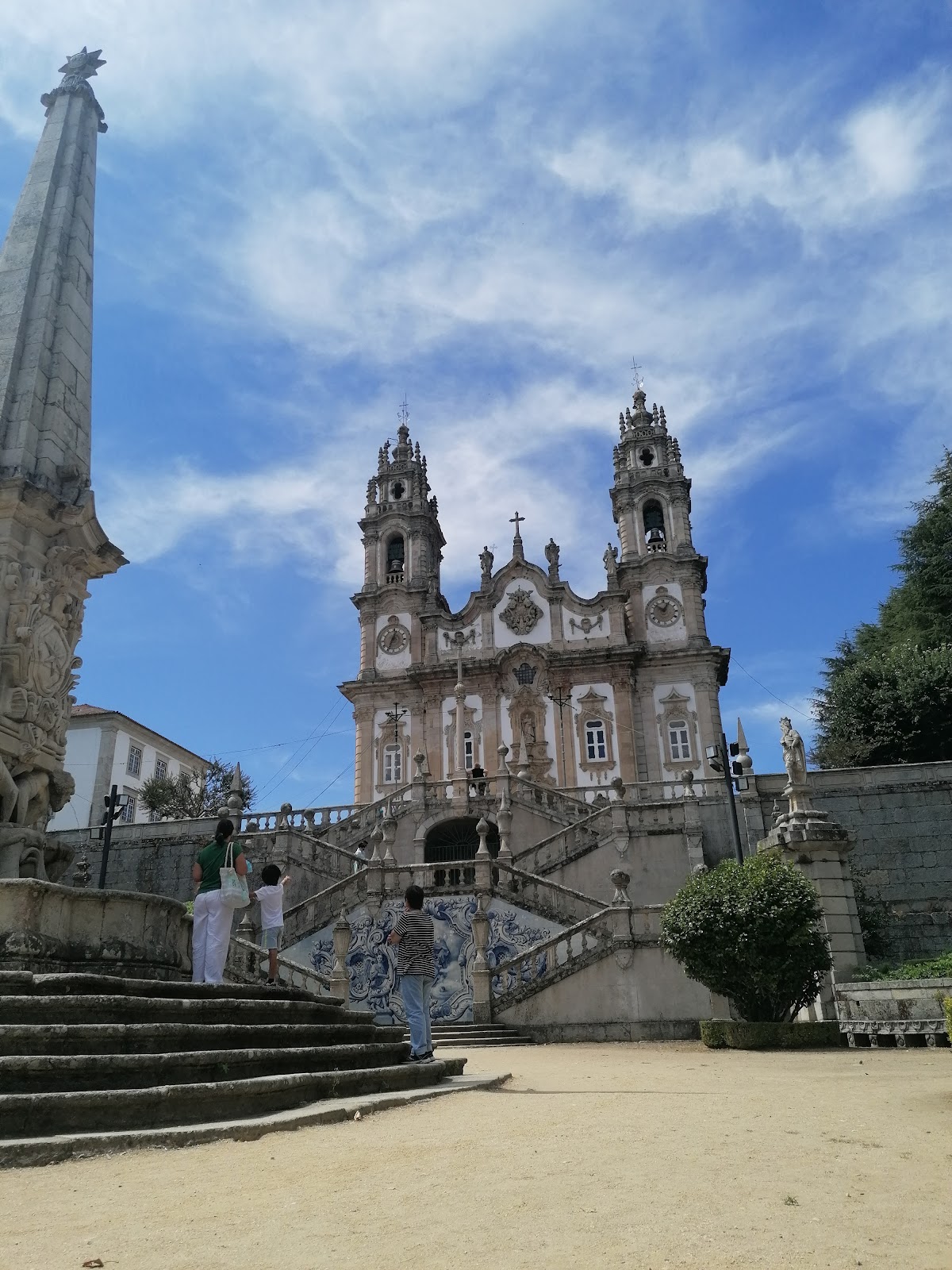
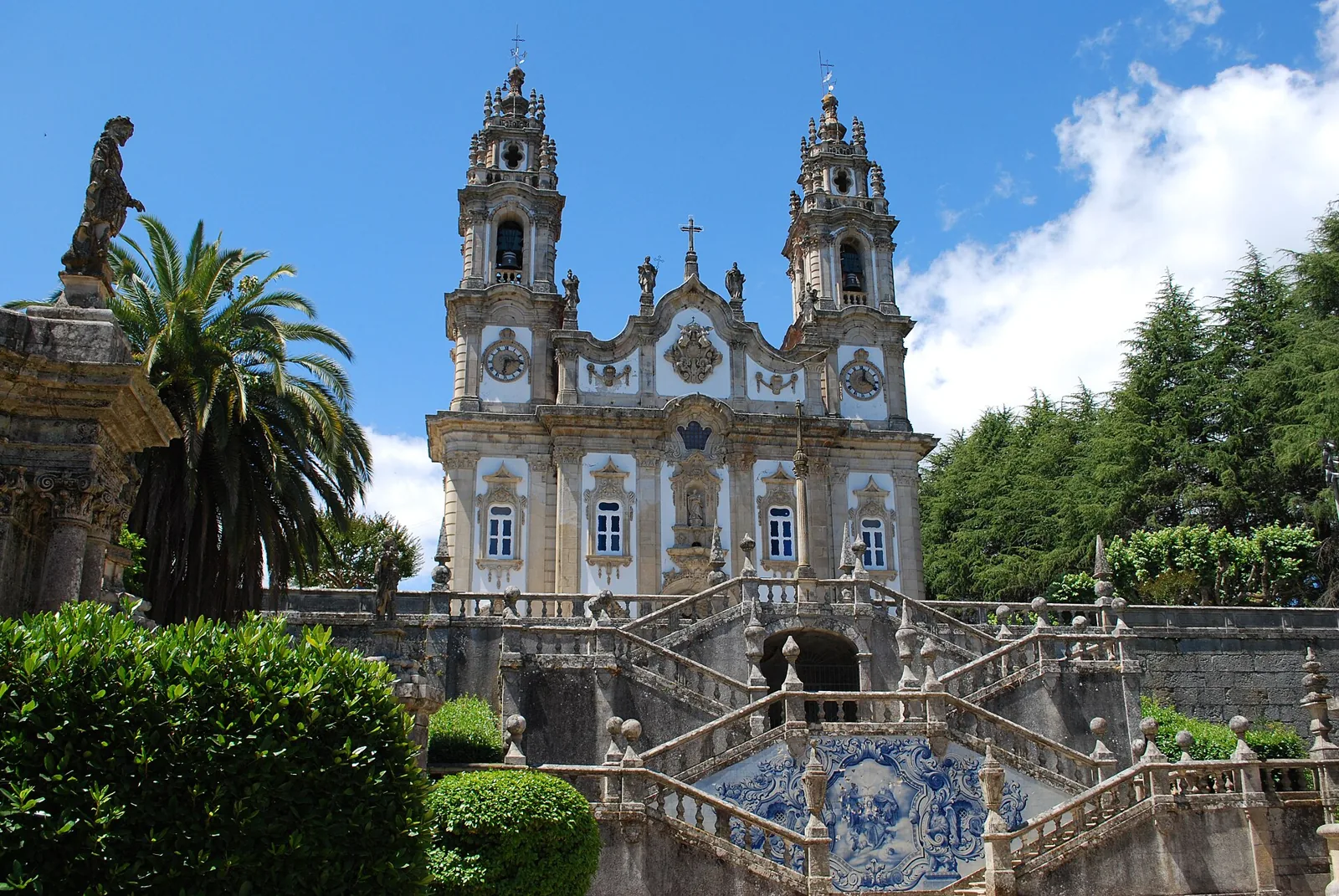
The Santuário de Nossa Senhora dos Remédios (Sanctuary of Our Lady of Remedies) is Lamego's postcard image: a Baroque sanctuary at the top of the hill of Santo Estêvão, linked to the city by a monumental staircase of 686 steps, divided into nine flights and decorated with chapels, statues, fountains and obelisks. It has been classified as a Property of Public Interest since 1984.
The devotion began in a small hermitage of Santo Estêvão, dating from 1361. In 1568 a new hermitage dedicated to Nossa Senhora dos Remédios was built, and the present sanctuary was begun in 1750, on the initiative of Canon José Pinto Teixeira, with a design attributed to Nicolau Nasoni. The towers came much later (the south tower was begun in 1880 and the north tower was only completed in 1905) and the staircase, started in 1777, was finished in the 20th century.
On the climb, the Pátio dos Reis stands out, formed by the Fonte dos Gigantes, with an obelisk of about 15 metres surrounded by statues of the last 18 names of the house of David; the Fonte da Sereia, where the sculpture of a triton on a dolphin recalls a mermaid; and the monumental Fonte do Pelicano. In the churchyard are the monolithic cross and a granite fountain designed by Nasoni, dated 1738. Inside, it is worth seeing the altarpiece of the capela-mor (chancel), the altars of São Joaquim and Santa Ana, the azulejo (tile) panels and the stained-glass windows.
The surrounding park, the Mata dos Remédios, was planted with trees in 1898, with a lake, bridge and grotto, and has many species of trees and picnic spots. You can climb on foot, step by step, or go by car along an access road to the sanctuary. The main day of the festivities in honour of Nossa Senhora dos Remédios is 8 September, a municipal holiday (see below).
Sé Catedral de Lamego
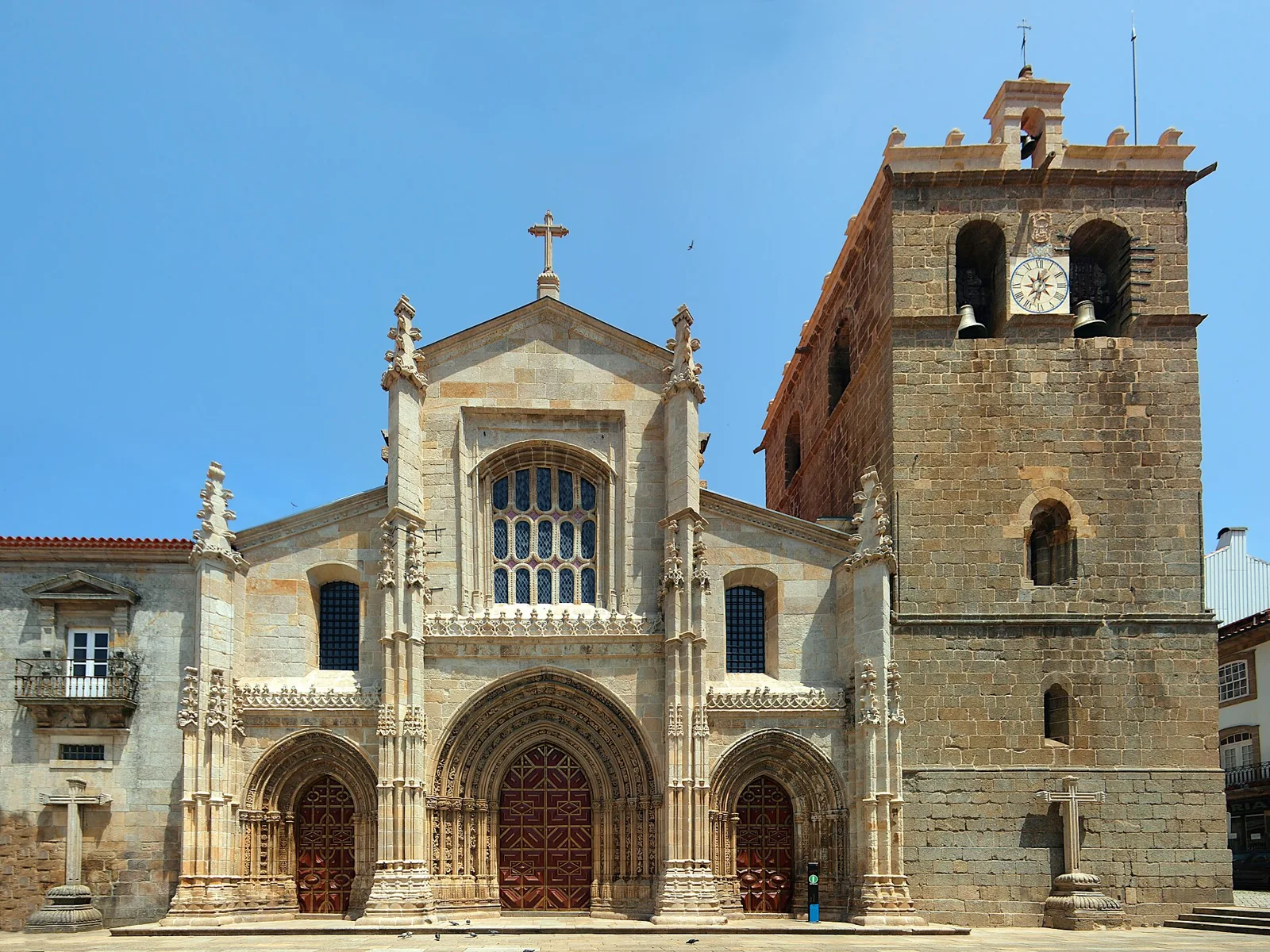
The Sé de Lamego (Lamego Cathedral), founded in the 12th century, is a National Monument. The tower is Romanesque up to the height of the bells (12th-13th centuries) and the upper part dates from the 16th century. The façade has three portals with multiple archivolts, worked in granite, in the late Gothic style, with Renaissance influence on the two side ones.
The interior has three naves and, on the vaults, the colourful paintings by Nicolau Nasoni, executed between 1737 and 1738 with scenes from the Old Testament. In the Capela do Santíssimo there are three gilded woodcarving altars by João Correia Lopes (around 1753) and a chased silver frontal from the 18th century. The cloister, completed in 1557, has four groups of arches in the transition from Gothic to Renaissance and two chapels commissioned by Bishop D. Manuel de Noronha.
Castelo e Cisterna
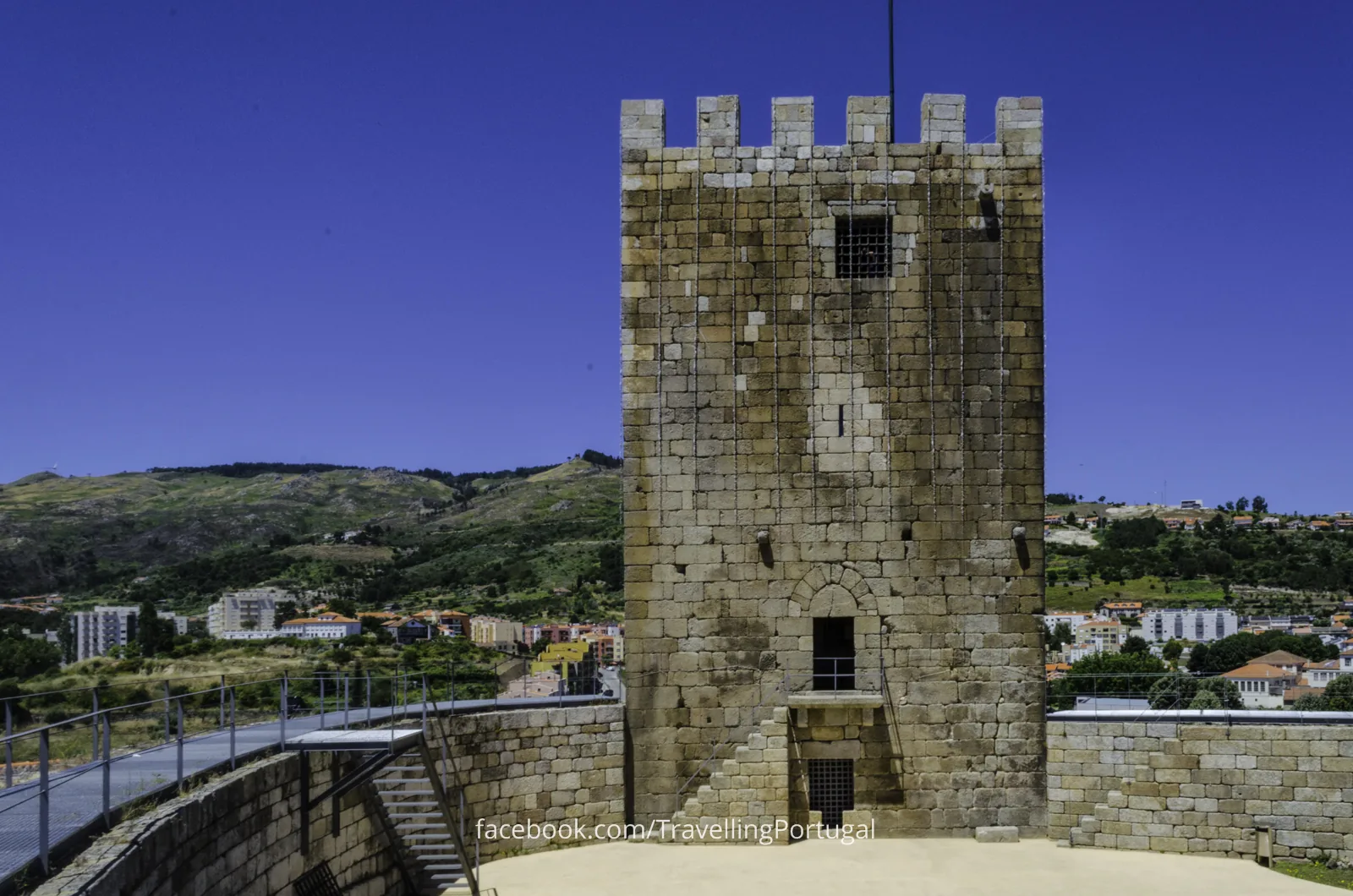
The Castelo de Lamego (Lamego Castle) stands on the highest part of the city, at 543 metres above sea level, and has been a National Monument since 1910. The keep, square in plan and about twenty metres high, and the alcáçova (citadel) were built in the second half of the 12th century. From the top of the walls you can see the rivers Coura, Balsemão and Varosa.
Outside the walls is the old stone cistern, about 20 metres long by 10 wide and with a vaulted ceiling, which reopened in November 2013 as the Centro de Memória (Memory Centre). The Castelo neighbourhood around it is one of the city's historic neighbourhoods and is where the medieval fair is held in July.
Museu de Lamego
The Museu de Lamego (Lamego Museum) occupies the former Paço Episcopal (Episcopal Palace), rebuilt in the second half of the 18th century. It houses pieces classified as National Treasures in 2006: a medieval sarcophagus with a hunting scene, the panels that Vasco Fernandes (Grão Vasco) painted between 1506 and 1511 for the capela-mor of the Sé, Flemish tapestries woven in Brussels in the first half of the 16th century, and figurative azulejo panels from the 17th century.
Please note: according to the official website (September 2026), the museum is closed for refurbishment works (PRR). Check that it has reopened before planning your visit.
Igreja de Santa Maria de Almacave
Built next to an Arab necropolis (macab, hence the name Almacave), it is a Romanesque church of the 12th century, profoundly altered in the 17th century: the azulejos with geometric and plant motifs, the pulpit and the gilded woodcarving date from that time. From the original Romanesque, the pointed-arch portal with four archivolts survives. It is a National Monument and the place that tradition associates with the Cortes of 1143.
Capela de São Pedro de Balsemão
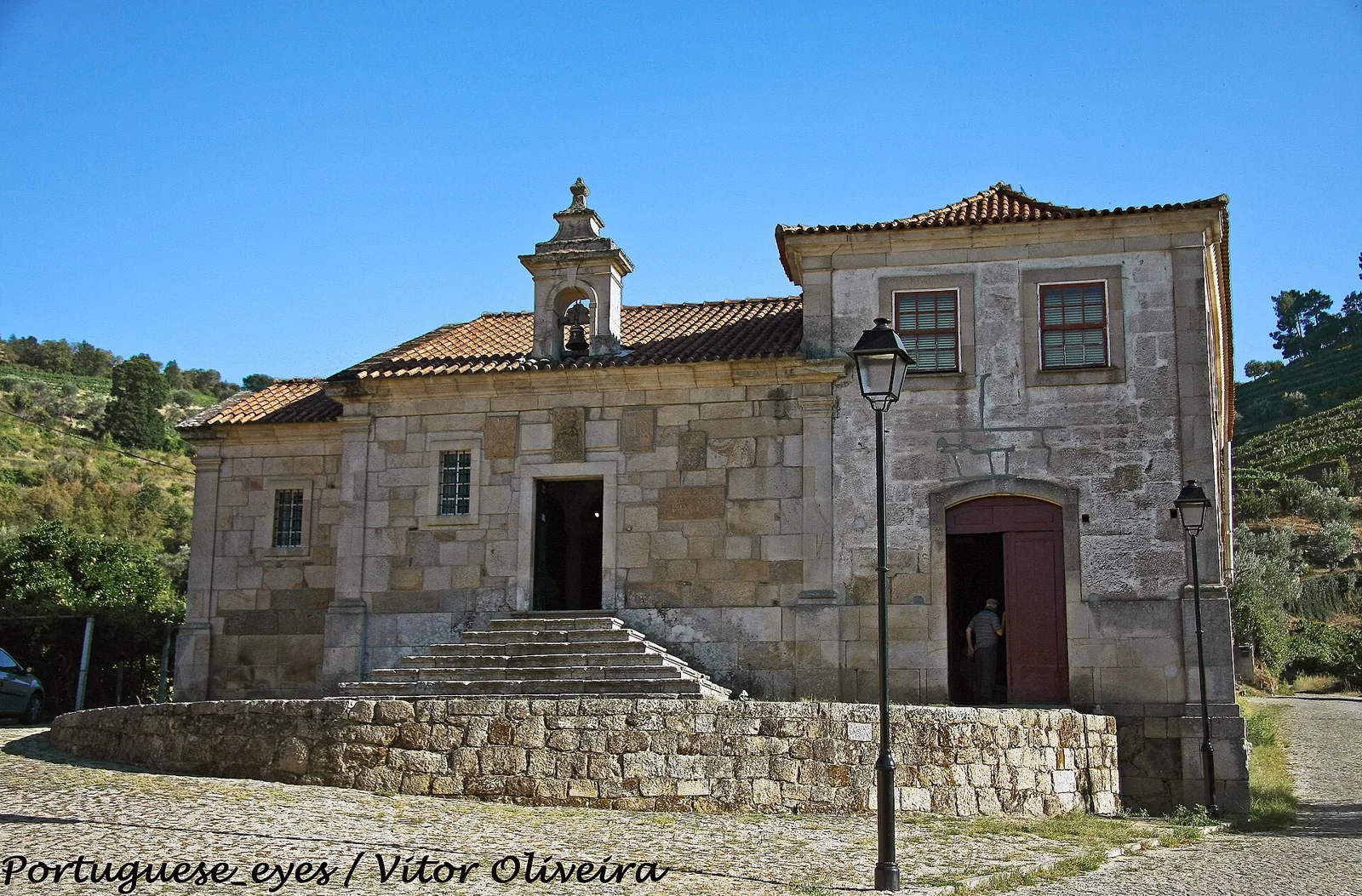
The Capela de São Pedro de Balsemão (Chapel of São Pedro de Balsemão), about 3 km from the city, beside the river Balsemão, is the oldest monument in Lamego. Its chronology is debated: it has been dated to the Visigothic period (6th-7th centuries) or to the period of expansion of the kingdom of Asturias (9th-10th centuries). It preserves its three-nave plan, with horseshoe-shaped arches on reused Roman Corinthian capitals, and holds the Gothic tomb of the Bishop of Porto, D. Afonso Pires. It is part of the Rotas Medievais do Vale do Douro (Medieval Routes of the Douro Valley) and is a National Monument.
Other churches and convents
- Igreja e Convento de Santa Cruz: a convent begun in 1596, with gilded woodcarving altars and 18th-century azulejo panels.
- Igreja do Mosteiro das Chagas: a Poor Clares' monastery founded in 1588, with a Renaissance portal and 17th-century azulejos.
- Igreja do Desterro: founded in 1640, it has rich 18th-century gilded woodcarving.
- Capela de Nossa Senhora dos Meninos, in the bairro da Ponte: built between 1551 and 1569, with twenty-five paintings on the ceiling of the capela-mor.
- Igreja de São Francisco (convent of 1599), Igreja da Graça (1647), Capela do Espírito Santo and Capela de Nossa Senhora da Esperança (1586).
- Convento de Santo António de Ferreirim, 8 km from the centre along the EN226: the church holds part of the altarpieces of the so-called Mestres de Ferreirim (Masters of Ferreirim) (Cristóvão de Figueiredo, Gregório Lopes and Garcia Fernandes), from the early 16th century.
Mansions with coats of arms, fountains and historic neighbourhoods
The centre of Lamego is full of manor houses with coats of arms, such as the Casa das Brolhas (1771, a Property of Public Interest, on the rua Macário de Castro), the Casa dos Serpas, the Casa dos Vilhenas (today the Santa Casa da Misericórdia and its museum), the Casa das Mores or the Casa do Espírito Santo, home to the Clube Lamecense since 1912. The former Hospital da Misericórdia is now the Teatro Ribeiro Conceição. Among the historic public fountains are the Chafariz dos Remédios (the Fonte de Nasoni), the Fonte do Espírito Santo and the Fonte do Desterro.
It is worth strolling unhurriedly through the bairro do Castelo, the bairro da Ponte, the rua Nova, the rua de Almacave and the Praça do Comércio.
Nature, parks and trails
- Mata dos Remédios: the sanctuary's park, with paths, a lake, a bridge and a grotto.
- Parque Isidoro Guedes: built in 1834 in the enclosure of the former Convento dos Gracianos and remodelled in 1999, with a café and a playground.
- Parque Urbano de Lamego: a new space for leisure, sport and environmental education on the banks of the ribeira do Coura, next to the Mata dos Remédios.
- Parque Biológico da Serra das Meadas: run by the Câmara (town council), between 955 and 1,004 metres above sea level, with native fauna.
- Caminho dos Monges: a route of about 42 km between Lamego (19 km) and Tarouca (23 km), in the Varosa valley, which follows the presence of the Cistercian monks.
- Caminhos de Santiago: Lamego is crossed by the Caminho Português Interior de Santiago and by the Caminho de Torres.
- Circuitos Pedonais Urbanos (Urban Walking Circuits): two themed routes, “Lamego Histórico” (Castle, Cistern, Igreja de Almacave) and “Lamego Monumental” (Sé, Igreja do Desterro, Igreja de Santa Cruz, Museum), starting from the Loja Interativa de Turismo (Interactive Tourism Shop).
Food and wine
Lamego is known for its presuntos (cured hams) and roast kid with oven-baked rice. Local cooking also includes oven-roasted rabbit, pickled trout, smoked sausages and pork meats, corn bread, cheese and bôlas: bread filled with ham, cooked ham, vinha d'alhos (pork marinated in wine and garlic), chicken, tuna, sardine or salt cod. The Feira da Bôla is usually held at the end of June.
Among the sweets, the biscoito da Teixeira, the pastéis “Lamegos”, the pão-de-ló, the doce de ovos, the peixinhos de chila and the leite-creme stand out. To these are added the fruits from the orchards on the hillsides: some quintas sell cherries, peaches and apples.
Wines and sparkling wines
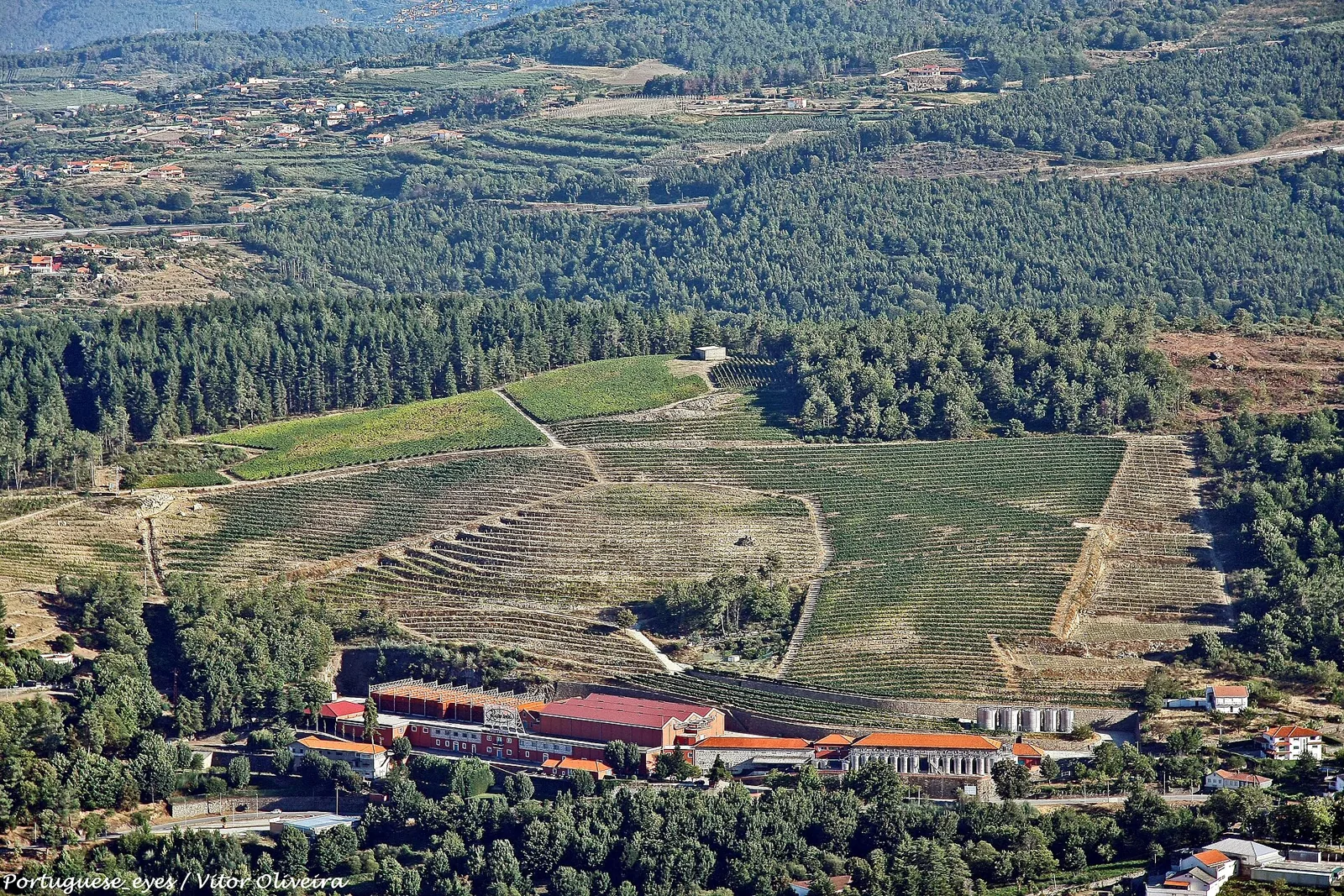
The municipality is part of the Douro Demarcated Region, so it produces Port wine and DOC table wines, and is also a land of natural sparkling wines. The prestige of Lamego's wines goes back to the 16th century and gained a new dimension with the Caves da Raposeira, a company founded about 120 years ago (according to its website) that produces sparkling wine by the classic method, with second fermentation in the bottle and the “remuage” and “dégorgement” operations.
The caves are about 1.7 km from the Sé. According to the official website, guided tours run from Tuesday to Saturday at 09:30, 10:30, 11:30, 14:30, 15:30 and 16:30 (information and bookings: +351 254 655 003 or visitas@caves-raposeira.com). The shop is open from Tuesday to Saturday, 09:00 to 13:00 and 14:00 to 18:00, and is closed on Sundays and public holidays. Several quintas in the municipality also offer wine tastings: see the hotels and quintas in Lamego.
Festivals and fairs through the year
Usual dates (always check the programme of each edition):
- Semana Santa (Holy Week, at Easter) and the Queima do Judas de Lalim.
- Feira de Santa Cruz (3 May and the following weekend).
- Feira da Bôla (end of June) and Festa de São João (24 June).
- Feira Medieval in the bairro do Castelo (July) and the Festa de Nossa Senhora dos Aflitos (3rd Sunday of July).
- Festas em honra de Nossa Senhora dos Remédios (from the end of August to mid-September; the main day is 8 September, a municipal holiday): the region's great romaria (pilgrimage festival). In 2026 they ran from 21 August to 9 September; see the event and the pilgrimage guide.
- Festa de Nossa Senhora dos Meninos (18 to 20 September) and Feira de Santo Estêvão (26 December).
- Weekly market: every Thursday.
- Entrudo de Lazarim (Carnival), in the municipality.
Other portal events in Lamego, in the 2026 edition: the Festas das Vindimas (Harvest Festivities), the Festival de Vinho do Douro and the ZigurFest.
Suggested itinerary
One day in Lamego
- Morning: the Sé, the Igreja de Almacave and the Castle with the Cistern, all a few hundred metres from one another. If the Museum has reopened by then, add it to your visit to the Sé.
- Lunch: presunto, bôla or roast kid.
- Afternoon: the Santuário dos Remédios and the Mata, about 1 km from the Sé; climb the staircase on foot and return by car, or the other way round.
- Late afternoon: a guided visit to the Caves da Raposeira, with a sparkling wine tasting (Tuesday to Saturday; the last tour is at 16:30).
Would you like an hour-by-hour route, with opening times and alternatives for each day of the week? See Lamego in one day: a walking itinerary.
Two days
On the second day, add the Capela de São Pedro de Balsemão (3 km), the Convento de Ferreirim (8 km) and a tour of the quintas in the municipality, or a trip to Peso da Régua (10 km), where the Douro cruises depart.
Getting there and getting around
- By car: the A24 (Viseu-Chaves) has three junctions in the municipality, one of them in Lamego. From Porto, the usual route is the A4/IP4 to Vila Real and then the A24 towards Viseu as far as the Lamego exit, about 1h30 in total. From Régua it is about 10 km along the EN2. The EN226 links to Moimenta da Beira and Tarouca.
- By train and bus: the Douro line reaches Régua; from there there are daily bus connections to Lamego. The city has a central bus station (with connections to Régua and Tarouca) and two taxi ranks.
- In the centre: the historic centre is easy to explore on foot; the Santuário requires a climb (on foot or by car).
Where to stay in Lamego
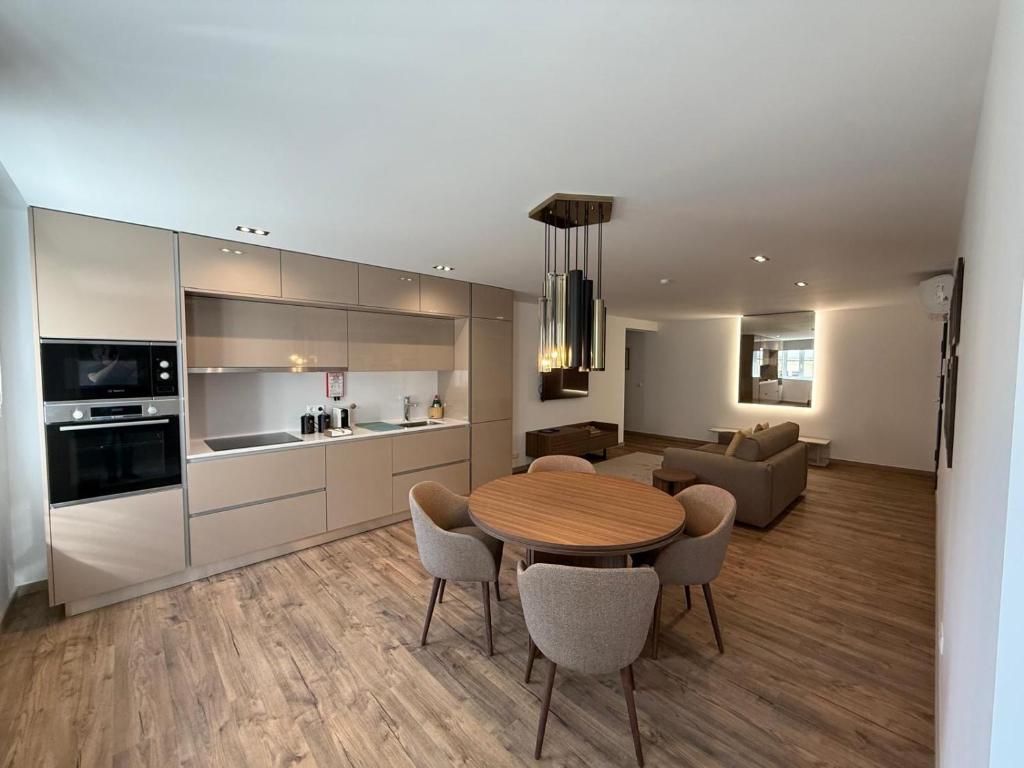
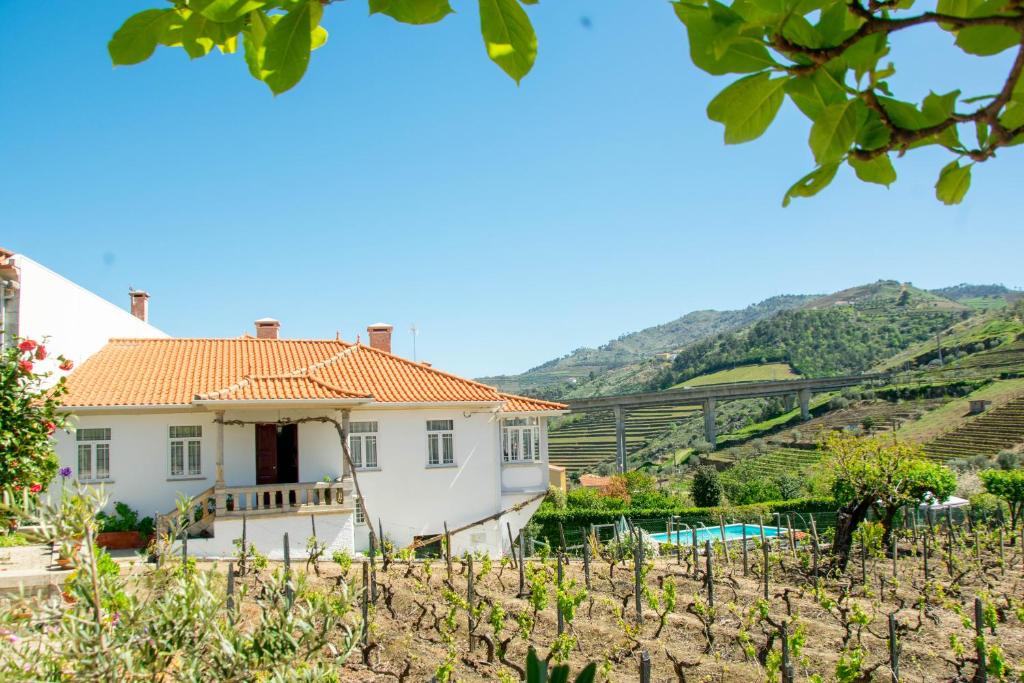
Lamego has hotels and guesthouses in the historic centre, a few minutes' walk from the Sé, the Museum and the Castle, and, on the outskirts, quintas and rural tourism houses among the vineyards, better suited to those travelling by car. On the Lamego accommodation hub you can see them all, ranked by guest rating, and in the post Accommodation in Lamego you will find a commented selection. If you are torn between Lamego and Régua, compare the two: see the accommodation in Peso da Régua.
Near Lamego
- Peso da Régua, 10 km away, gateway to the Douro and starting point of the Douro cruises.
- Pinhão, in the heart of the valley.
- The Rota N222 and the itinerary Douro in 3 days.
- Also: Lamego in one day and Visiting the Douro without a car.
Frequently asked questions about Lamego
How many steps are there on the Remédios staircase?
686 steps, divided into nine flights, among them the Pátio dos Reis, with the Fonte dos Gigantes and an obelisk of about 15 metres.
Is the Museu de Lamego open?
According to the official website, in September 2026 the museum is closed for refurbishment works (PRR). Check that it has reopened before planning your visit.
When are the festivities of Nossa Senhora dos Remédios?
They take place from the end of August to mid-September, with the main day on 8 September, a municipal holiday. In 2026 they ran from 21 August to 9 September.
Was Portugal really born in Lamego?
That is the tradition of the Cortes de Lamego of 1143, associated with the Igreja de Almacave, but historians consider that these Cortes did not exist as such. Lamego is, all the same, a thousand-year-old city with one of the richest religious heritages in the north.
How long should I spend in Lamego?
One day is enough for the monuments of the centre and the Santuário; with two days, add Balsemão, Ferreirim, the caves and the quintas of the municipality.
Is Lamego a district capital?
No. It is the seat of the diocese of Lamego, the only Portuguese diocese that does not correspond to a district capital.