Photo: Ricardo Saraiva de Almeida · CC BY-SA 4.0 · source
Lamego: Remédios Sanctuary, Cathedral and Museum — what to see and how to plan the visit
· Team Douro Vinhateiro
Lamego's three central landmarks are the Sanctuary of Nossa Senhora dos Remédios on top of Monte de Santo Estêvão, the cathedral consecrated in 1175, and the Museu de Lamego, housed in the former Bishops' Palace since 1917. Treat the sanctuary and its park as a separate visit, and check first whether the museum is open: its official page mentions refurbishment works.
Lamego has three monuments that explain the city well: the Sanctuary of Nossa Senhora dos Remédios, the cathedral and the Museu de Lamego. Together they tell centuries of religious and artistic history. This guide gathers what the official pages of the sanctuary, the parish council and the museum say about each one, and what you should confirm before you go. If you would rather walk the whole city, see our one-day walking route in Lamego; here the focus is on the monuments.
What is the Sanctuary of Nossa Senhora dos Remédios?
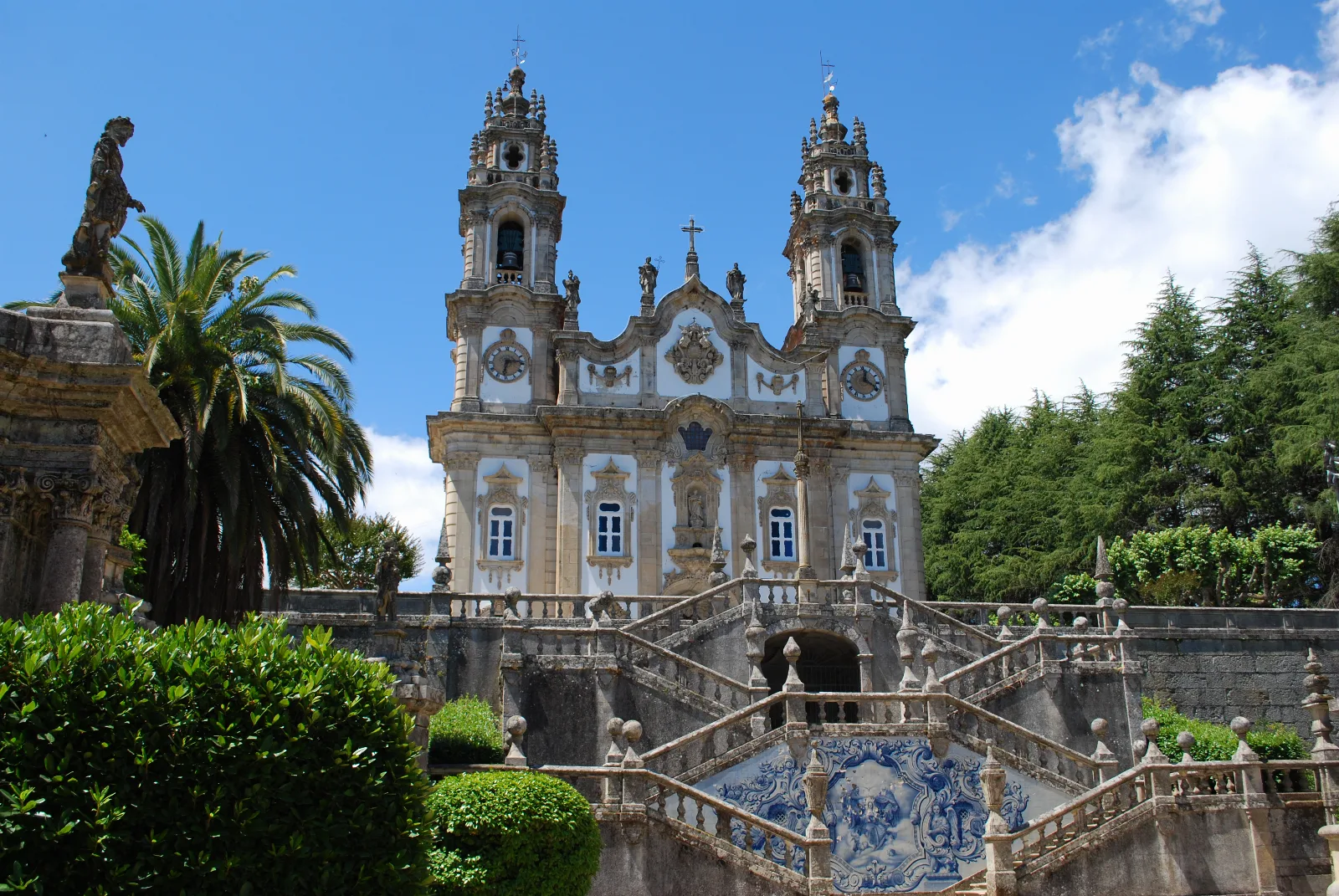
The Sanctuary of Nossa Senhora dos Remédios stands on top of Monte de Santo Estêvão and is part of the city's skyline. A medieval hermitage dedicated to Saint Stephen once stood on the spot. In 1568 Bishop D. Manuel de Noronha authorised the demolition of the old hermitage and ordered another chapel built, dedicated to Our Lady of Remedies. That chapel was demolished in turn to make way for the present sanctuary, whose first stone was laid in 1750 on the initiative of Canon José Pinto Teixeira.
The building is Baroque and worked entirely in granite. The parish council's page says the design is believed to be by Nicolau Nasoni. Inside, look for the eighteenth-century carved woodwork, the high-altar retable with the image of Our Lady of Remedies, the side altars of Saint Joachim and Saint Anne, azulejo panels and stained glass. The two towers, designed by the architect Augusto de Matos Cid, were begun much later: the south tower in 1880, while the north tower was only finished in 1905.
What is there to see on the stairway and in the park?
The stairway was begun in 1777, but the work was only completed in the twentieth century. Its most striking part is the Pátio dos Reis, built around the Fonte dos Gigantes: a basin with four atlantes standing on dolphins supports an obelisk about 15 metres high. The courtyard is lined with statues representing the last 18 names of the House of David. Further along you will find the Sereia fountain, where a triton riding a dolphin looks like a mermaid to many visitors, and the Pelican fountain in carved granite.
The park, crossed by several paths, has corners with picnic tables and many tree species, among them yews, cypresses, lime trees, oaks, chestnuts and strawberry trees. The planting, lake, bridge and grotto were commissioned in 1898 from the Companhia Hortícola do Porto; the lower grotto was built in 1910. If you are thinking of going during the festivities in honour of Our Lady, read our piece on the Festas dos Remédios first, because the atmosphere and the crowds change completely.
Why is Lamego Cathedral more than a Gothic church?
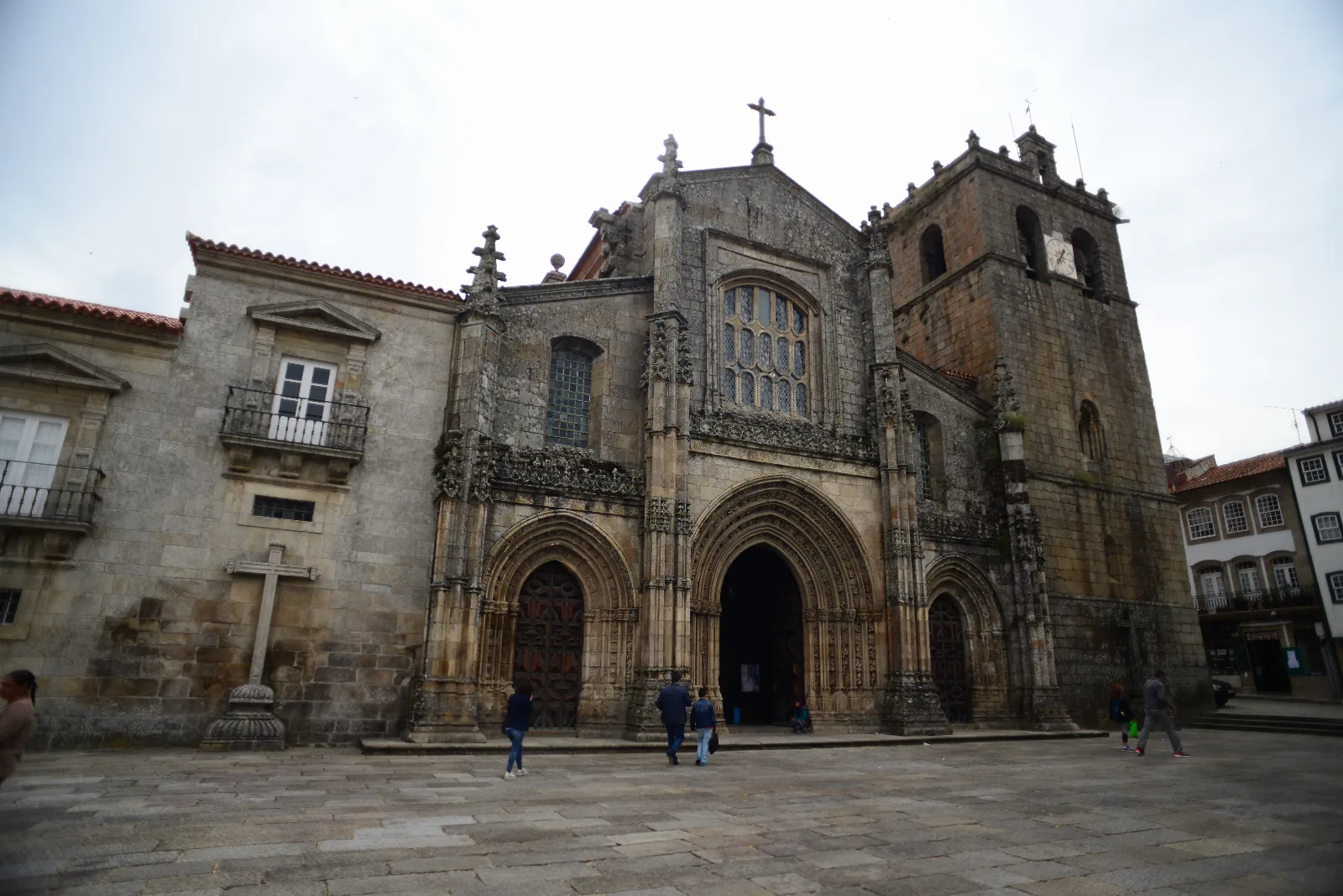
The Lamego Cathedral was begun in 1159 at the Rossio, in the lower part of the future city, consecrated in 1175 and dedicated to Saint Mary and Saint Sebastian; completion probably dates from 1191. Several periods have greatly changed the original Romanesque profile. Renovation began in the fifteenth century and continued through the next, under King Manuel I; the façade was built between 1508 and 1515 to plans by the architect João Lopes. It combines flamboyant Gothic with early Renaissance forms, with three pointed portals and four buttresses. The tower was remodelled in the eighteenth century, as was the paved churchyard.
Inside, the church has three naves. The ceilings were painted in the first half of the eighteenth century by Nicolau Nasoni, with architectural compositions and biblical scenes. There are also two organs with gilded carving, a neoclassical choir in the chancel and, in the sixteenth-century cloister, the chapels of Saint Anthony and Saint Nicholas, the latter finished in 1563 and decorated with eighteenth-century azulejos on the saint's life. Bishop D. Manuel de Noronha is buried in the Chapel of Saint Nicholas. We found no visiting hours for the cathedral in the sources we consulted, so check them locally.
What will you see at the Museu de Lamego?
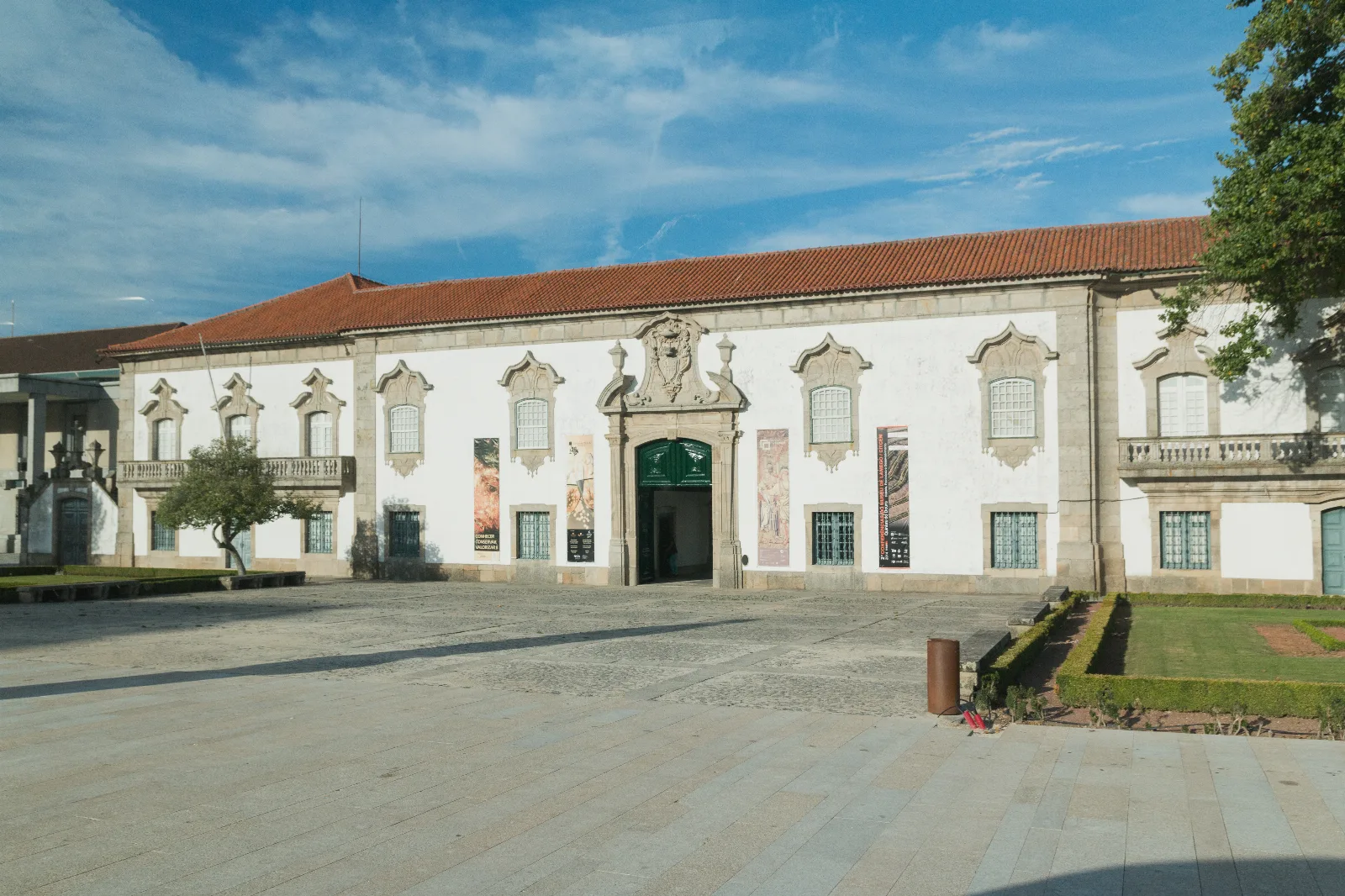
The Museu de Lamego occupies the former episcopal palace on Largo de Camões. Bishop D. Manuel de Vasconcelos Pereira, in office from 1772 to 1786, promoted a major Baroque reconstruction of the building. In 1911 the palace passed to the State, and the museum was created by decree on 5 April 1917 and opened in 1918, with João Amaral as its first director. Its origins go back to Bishop D. Francisco José Ribeiro de Vieira e Brito's idea of gathering the works scattered across the diocese in a museum of sacred art.
The collection covers painting, tapestry, furniture, goldsmithing, vestments, azulejos, archaeology and chapels in gilded carving, from the first to the twentieth century. The museum highlights as national treasures its group of Flemish tapestries woven in Brussels in the first half of the sixteenth century, the panels by Vasco Fernandes (Grão Vasco) painted for Lamego Cathedral, seventeenth-century azulejo panels and a medieval tomb chest. An important note: the official page says the museum is closed for refurbishment, even though an opening-hours panel appears on the same page. Confirm by phone or email from the official site before building your plans around it. For sacred art in the region there is also the Arquivo-Museu Diocesano de Lamego, a separate institution.
How do you fit these three monuments into one visit to Lamego?
Following the terrain, treat the sanctuary as a separate visit: it sits high on the hill, with its stairway, fountains and park, and deserves unhurried time. The cathedral and the museum belong to the historic centre and share the history of the former Bishops' Palace, so they make sense on the same route. If you want one more stop, the Lamego Castle is also in the site's catalogue. To stay in town, see for example the Hotel São Paulo and the other accommodation in Lamego.
Before you go, always confirm hours and closures on the official sites: the sanctuary's (santuarioremedios.pt) and the museum's (museudelamego.gov.pt). Hours change, and some details, such as the state of the museum's works, may have moved on since we consulted the sources.
Frequently asked questions
What are the main monuments to visit in Lamego?
The Sanctuary of Nossa Senhora dos Remédios, the cathedral and the Museu de Lamego. The sanctuary stands on top of Monte de Santo Estêvão; the cathedral and the museum are in the historic centre and share the history of the former Bishops' Palace.
Is the Museu de Lamego open?
When we consulted it, the museum's official page said it was closed for refurbishment works, although another panel on the same page showed opening hours. Check by phone or email, as listed on the official website, before you go.
When was the Museu de Lamego founded?
It was created by decree on 5 April 1917 and opened in 1918. It occupies the former eighteenth-century episcopal palace on Largo de Camões.
Who designed the Remédios Sanctuary?
The parish council's page says the design is believed to be by Nicolau Nasoni. The first stone of the present sanctuary was laid in 1750.
Do I need to book a visit to the cathedral?
We found no opening hours or visiting rules for the cathedral in the sources we consulted, so we do not state any. Check with the diocese or the local tourist office before you go.