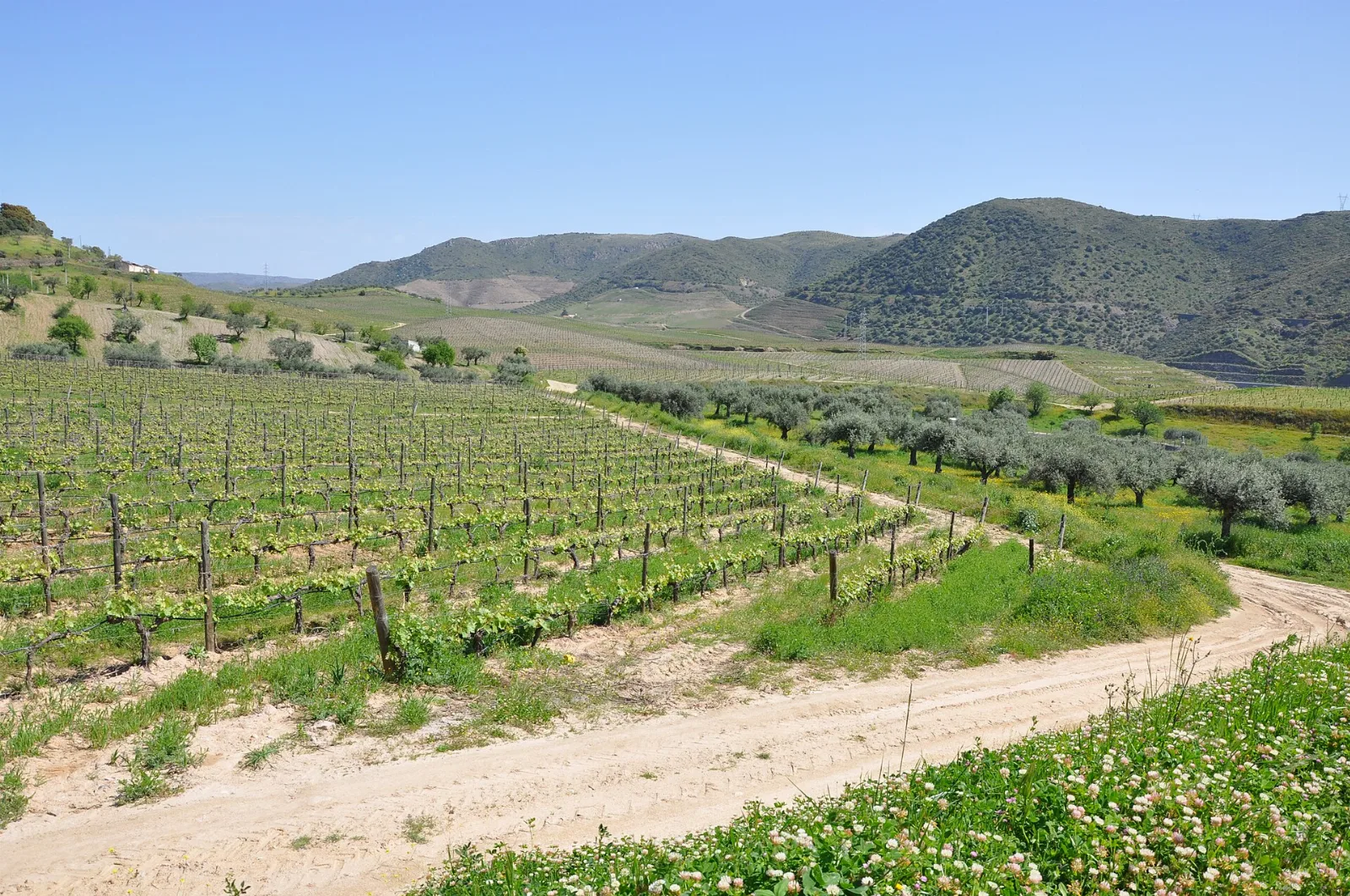
Photo: Joseolgon (Wikimedia Commons) · CC BY-SA 4.0 · source
Côa Valley and Foz Côa: rock art, museum and Pocinho in one itinerary
01 Oct 2026
To visit the Côa Valley, start at the Côa Museum in Vila Nova de Foz Côa and book the guided rock art visits (Canada do Inferno, Ribeira de Piscos or Penascosa) ahead, as each site has a daily visitor limit. You can then head to Pocinho, where the Douro Line ends and the last lock-equipped dam stands, and visit Quinta do Vale Meão, also by reservation.
In the far north-east of the Douro, the river Côa meets the Douro, and three reasons for a trip cluster around that meeting: thousands of engravings tens of thousands of years old, a museum with striking architecture, and a landscape of river, railway and vines. This guide is for readers who want to understand how these places relate, in what order to visit them and what to book in advance. The natural base is Vila Nova de Foz Côa, a municipality that holds two UNESCO-listed sites: the Côa Valley rock art and the Alto Douro Wine Region.
Seeing the rock art: sites, timing and difficulty
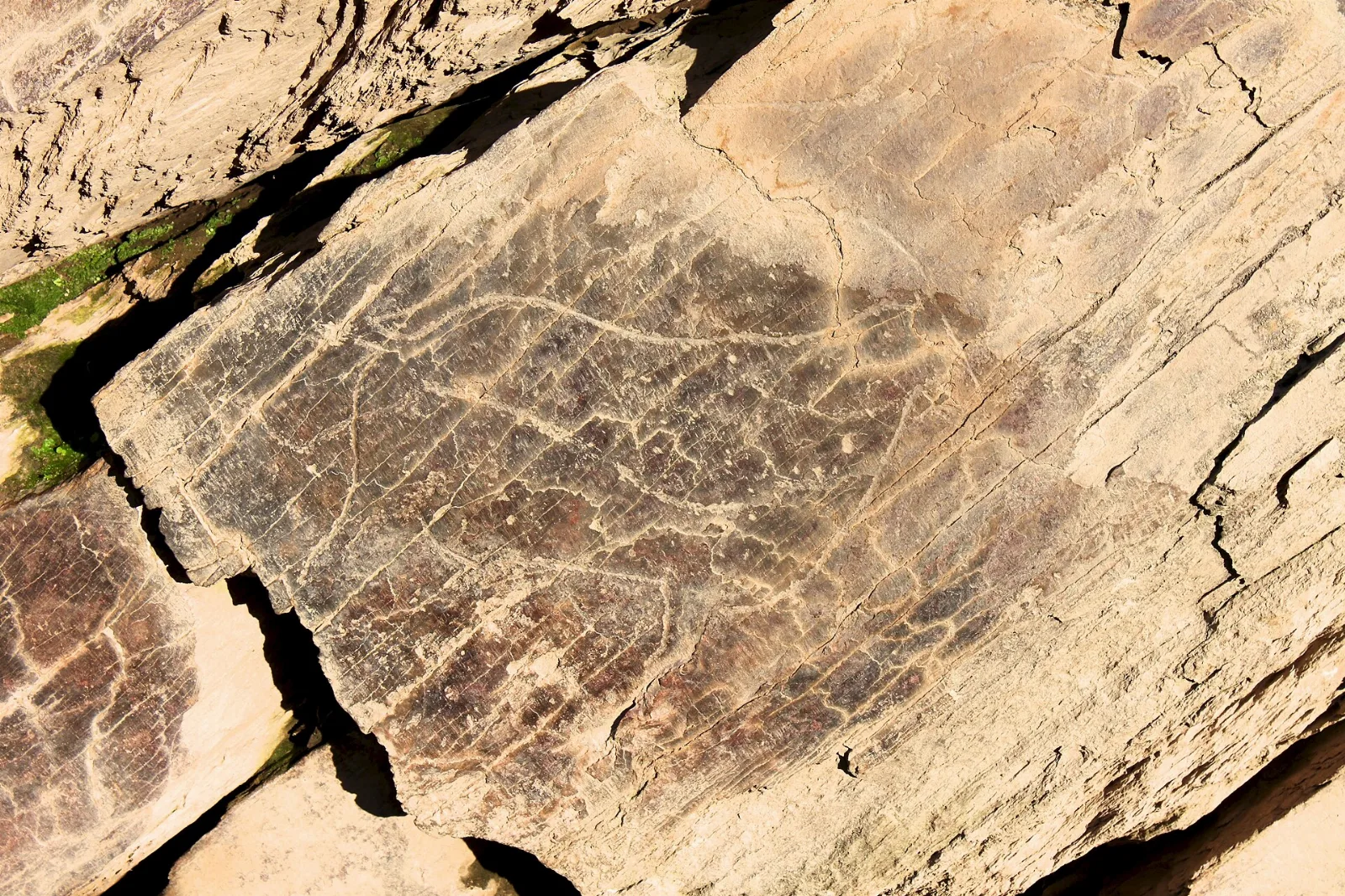
The Côa Valley Archaeological Park protects open-air engraved rocks along the river. According to the Côa Parque foundation, it brings together more than 1,200 rocks across about 80 sites in four municipalities (Vila Nova de Foz Côa, Figueira de Castelo Rodrigo, Pinhel and Mêda). It was inscribed on the UNESCO World Heritage list in 1998 and extended in 2010 to include Siega Verde in Spain. The sources place the engravings mainly in the Upper Palaeolithic, roughly 22,000 to 10,000 BC, with later work up to modern times; horses and aurochs are the most common animals, engraved on schist surfaces.
Not every site is open. Guided visits, made in all-terrain vehicles with guides trained in rock art, cover three sites:
- Canada do Inferno: morning visits only, because of the light. The Côa Parque rates it easy to moderate, with a longer route that includes steps. Departure is from the Côa Museum.
- Ribeira de Piscos (near Muxagata): also morning only, medium difficulty, with a long, winding route that the foundation does not recommend for people with reduced mobility.
- Penascosa (near Castelo Melhor): afternoon only, because the panels are in shade in the morning, and the easiest of the three, with a short path. Visitors gather at the Castelo Melhor reception centre. A night visit exists as well, at this site only.
Each site has a daily visitor limit for logistical and conservation reasons, and the Côa Parque recommends booking ahead by phone, e-mail or the form on its official site, stating date, site and number of people. The same body mentions a maximum of two sites per weekday, one in the morning and one in the afternoon. Because the departure point can differ, confirm it when you book.
The foundation also offers a kayak visit on the river Côa and an electric solar boat trip to the Fariseu rock art site, depending on the season.
The gateway: the building and the exhibition
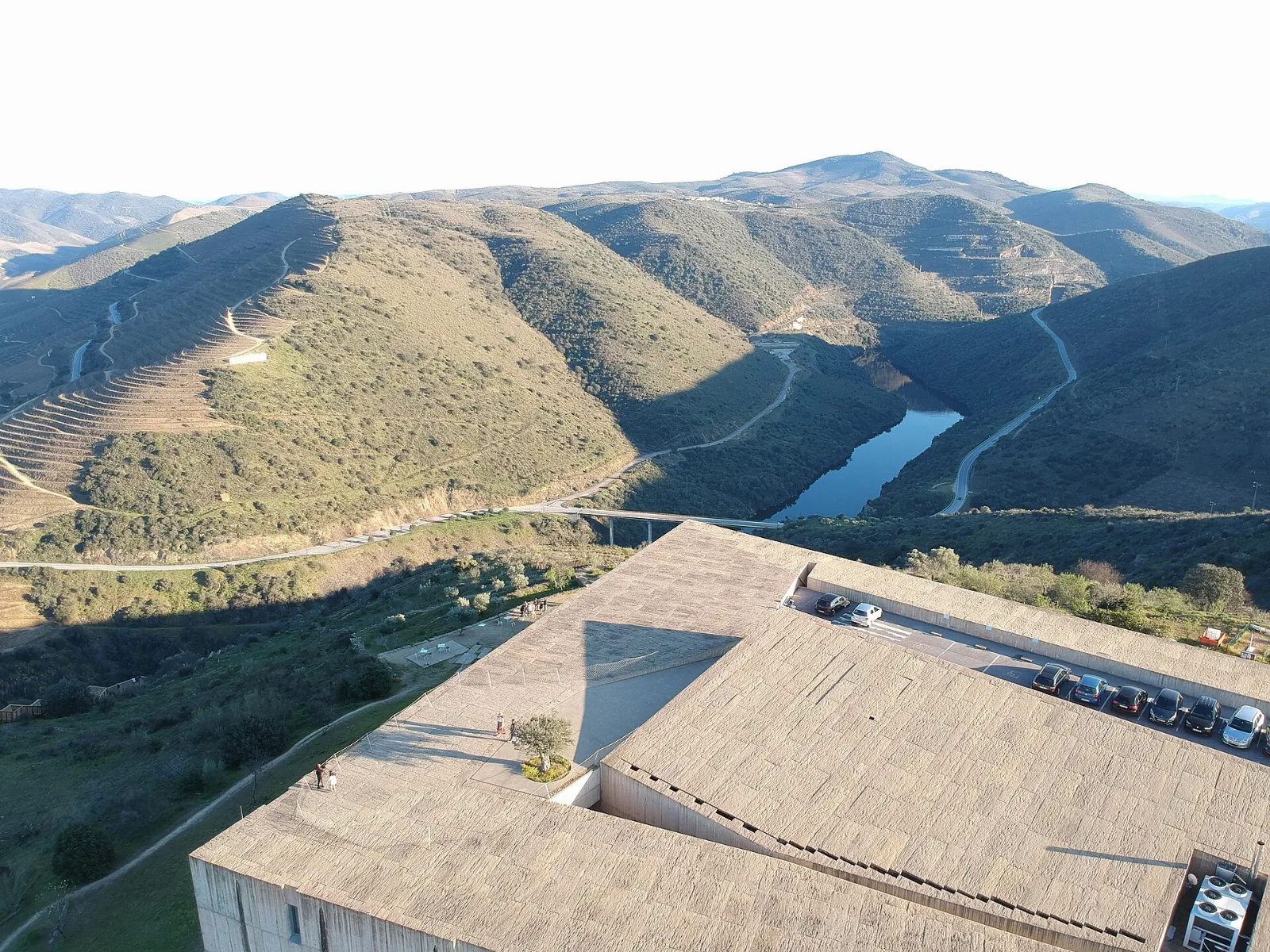
The Côa Museum stands on a hillside above the mouth of the Côa in Vila Nova de Foz Côa and opened on 30 July 2010. It was designed by the Porto architects Camilo Rebelo and Tiago Pimentel, who started from the idea that Palaeolithic art in the Côa is perhaps the first expression of land art. The concrete carries schist pigments, giving the yellowish colour and uneven texture of the local rock, and the arrival area and part of the roof work as a large viewpoint over the Douro and the Côa.
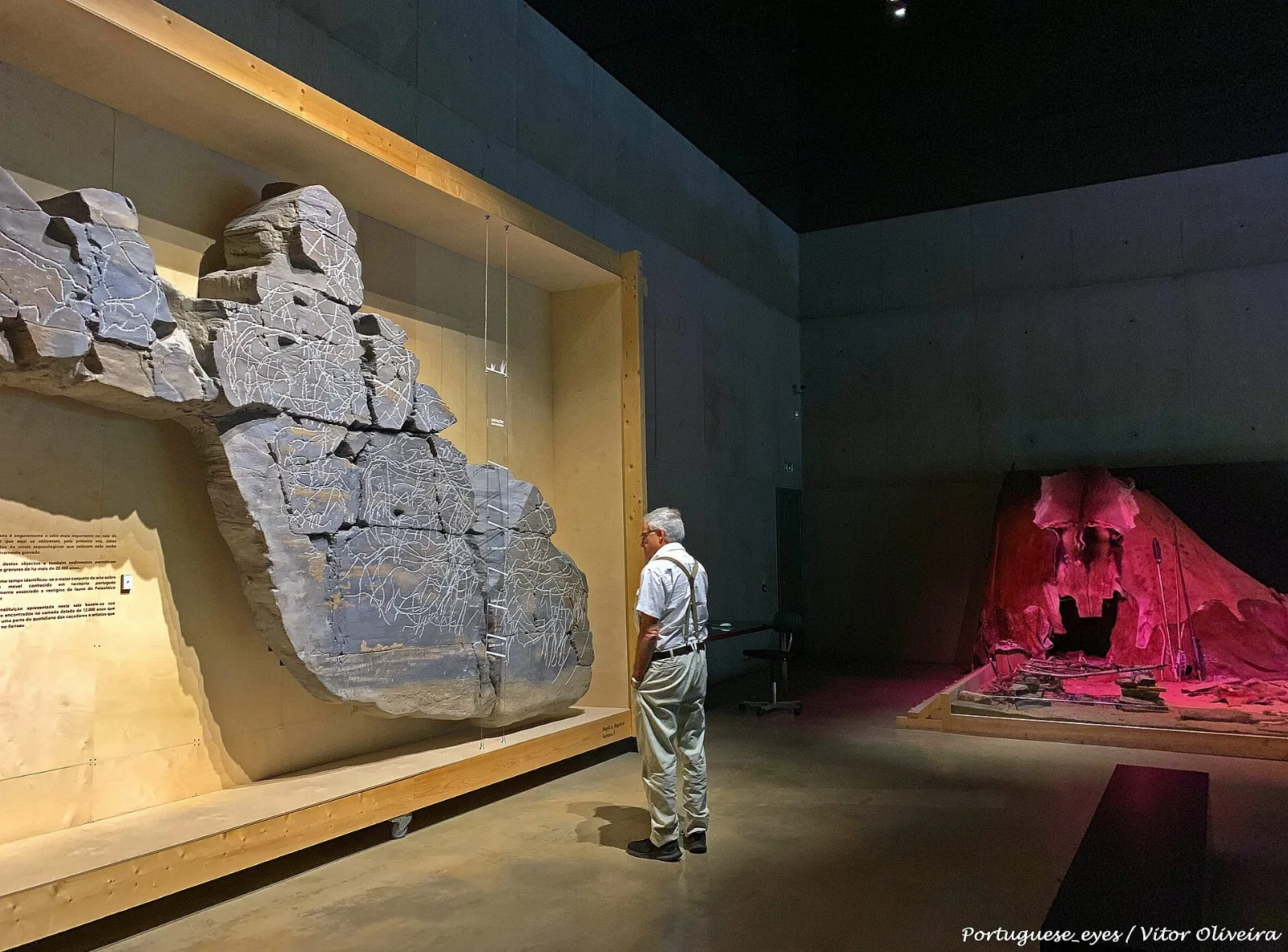
Inside, the permanent exhibition revolves around the rock art heritage; according to the press, the museum has seven exhibition halls and had received more than 470,000 visitors by July 2025. There are also temporary exhibitions, a Ciência Viva science centre, Portugal's largest rock art library according to the museum itself, and a restaurant. The foundation presents the museum as the starting point for discovering the rock art, not as a substitute for visiting the sites, so it makes sense to see it before going into the field.
The museum is open from 9:00 to 17:30 between October and April and from 9:00 to 18:00 from May to September; it closes on 1 January, 1 May and 25 December and, from 1 November to 31 March, on Mondays (visits to the sites continue in that period). These hours come from the official website and may change.
The last lock on the Douro and the end of the line
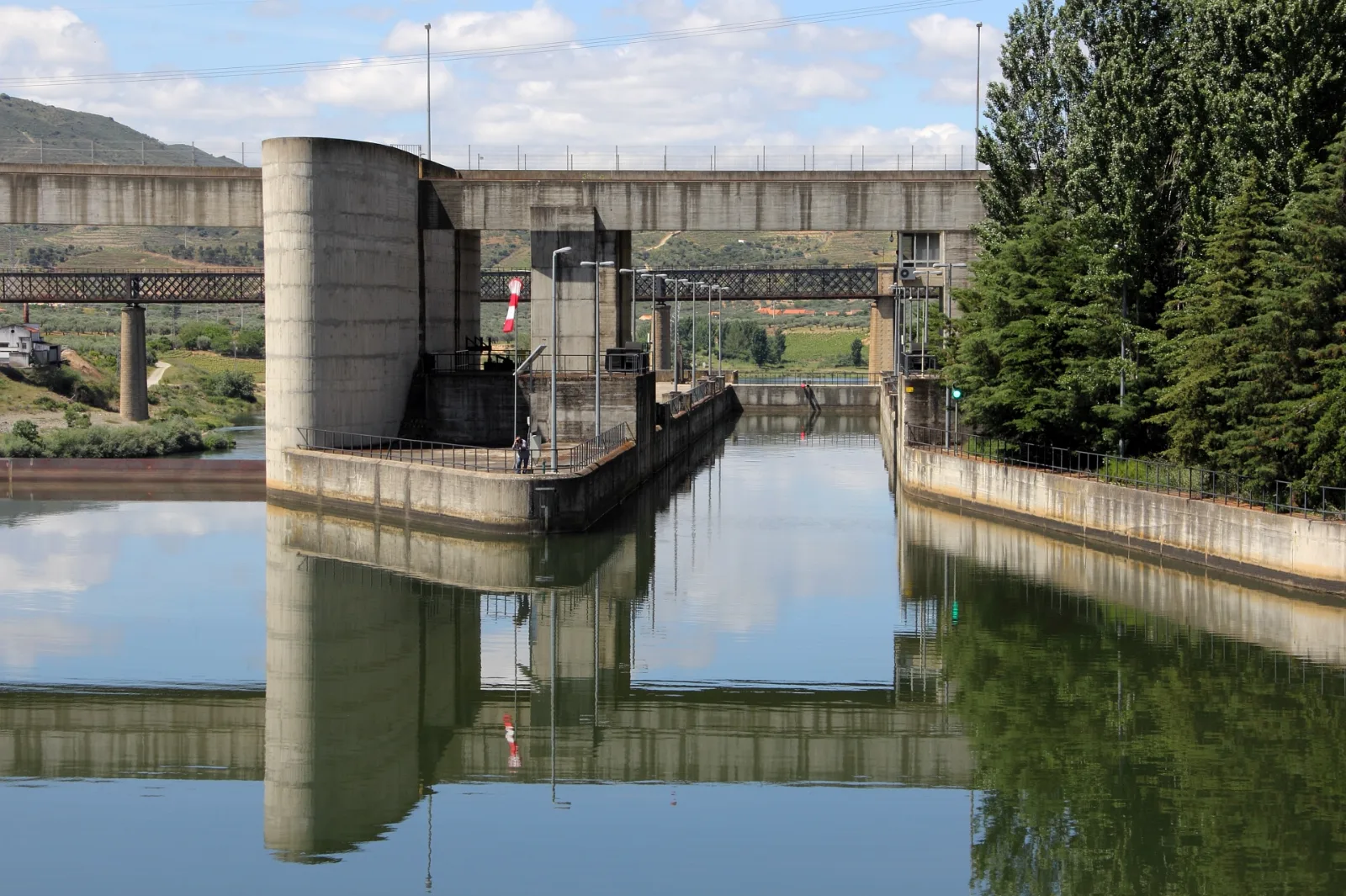
About seven kilometres from the museum, according to the Côa Parque, lies the village of Pocinho. The Pocinho Dam closes the river next to the village, between the mouths of the Côa and the Sabor. According to the sources we consulted, it was completed in 1982 and the power station entered service in 1983. It is a 49-metre concrete dam owned by EDP, with 186 MW of installed capacity, and the last dam with a navigation lock on the navigable Douro in Portugal, with a chamber of about 90 by 12.1 metres. River cruises between Régua and Pocinho pass through it; if you plan to travel by boat, see our guide to Douro cruises.
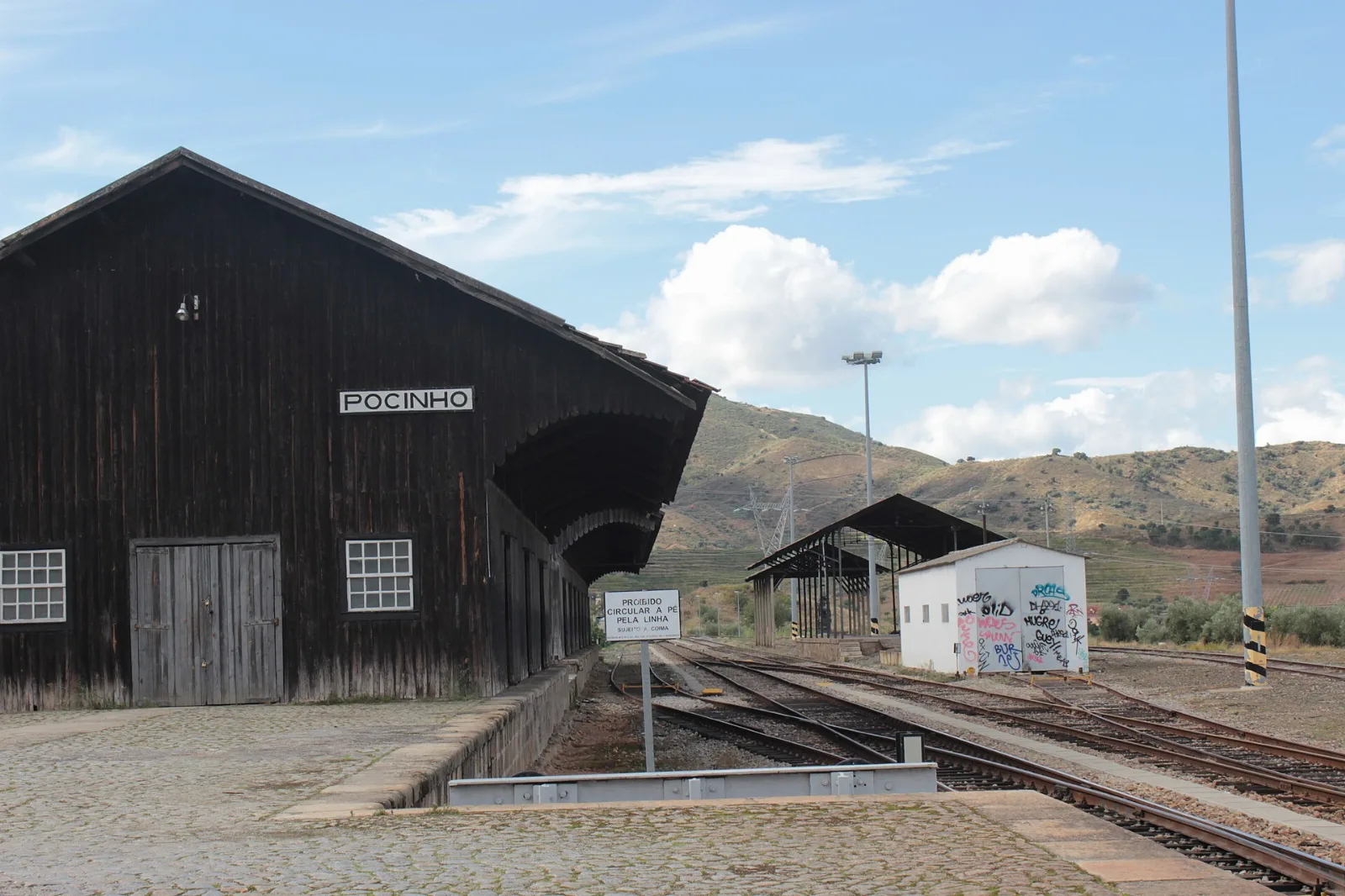
Pocinho station opened on 10 January 1887 and has been the terminus of the Douro Line since 1988, when the Sabor Line and the section to Barca d'Alva closed. According to Wikipedia, in 2023 there were six trains a day in each direction; always check with CP. On the reservoir shore there is the Pocinho High-Performance Rowing and Canoeing Centre, and Rota do Douro notes that the water is free to use for water sports and leisure. For travellers without a car, the line is a way of reaching this end of the valley; our guide to visiting the Douro without a car helps with the rest.
Quinta do Vale Meão and what to eat and drink nearby
Quinta do Vale Meão, near Pocinho, grew out of one of the last great projects of Antónia Adelaide Ferreira. In 1877 about 300 hectares of uncultivated hillside, Monte Meão, were bought, and between 1887 and 1895 a model estate was built there, with a manor house, cellars, a school and chapels. The estate's own timeline records 1952 as the first Barca Velha harvest and 1994 as the year the Olazabal family came to own the whole property. Today it has 104 hectares of vines and produces wine and olive oil. The estate offers guided visits to the historic vineyards, with a tasting in a room overlooking the cellar, and stresses that every option requires prior booking; its website also mentions arrival by train to Pocinho or by boat, again by reservation.
In Foz Côa, the sources highlight wine, olive oil, almonds, figs and almond sweets. The municipality presents itself as the almond blossom capital, and the Almond Blossom Fortnight celebrates spring; dates and programme should be confirmed with the municipality. For a second estate in the area, see Quinta do Vallado in the Côa Valley.
How to organise the day and where to stay
Given the Côa Parque's light rules, the most logical order is: morning at the Côa Museum or on a Canada do Inferno or Ribeira de Piscos visit; lunch in Foz Côa; and Penascosa in the afternoon. Since each visitor can do at most two sites on a weekday, the remaining time can go to Pocinho, the dam and the station, or to a booked visit at Quinta do Vale Meão. With more days, spread the sites over different days; our 3-day Upper Douro itinerary shows how to fit this area into the wider territory.
You can arrive by car or by bus; the Côa Parque mentions the operators Rede Expressos and Santos. By train, the destination is Pocinho station, about 7 km from the museum; we found no official information about local transfers, so ask your accommodation or the museum. For sleeping, Vila Nova de Foz Côa is the most practical base for the museum and the visits; on the municipality page we list places to stay, from rural guesthouses to wine estates. The right bank of the Douro, opposite Pocinho, belongs to the municipality of Torre de Moncorvo.
Practical cautions
- Book the site visits in advance; without a reservation there may be no place.
- In summer the Côa Parque advises a hat, water and sunscreen because of the risk of heat and dehydration; in winter or rain, waterproof clothing. Always wear comfortable footwear.
- Choose the site according to mobility: Penascosa is the most accessible; Ribeira de Piscos is not recommended for people with physical limitations.
- Follow the Côa Parque's code of conduct and the guides' instructions; the engravings are fragile.
What to confirm before you go
- Museum and site-visit hours for the season you travel in.
- Availability and departure point of each guided visit (Côa Museum, Muxagata or Castelo Melhor).
- Prices and ticket conditions, on the official Côa Parque website.
- Booking at Quinta do Vale Meão, by e-mail, and CP train times to Pocinho.
- Dates of local events, such as the Almond Blossom Fortnight, with the municipality.
Frequently asked questions
Do I need to book the Côa rock art visits?
The Côa Parque recommends booking ahead because each site has a daily visitor limit. Book by phone, e-mail or the form on the official website, giving the date, the site you want and the number of people.
Which of the three sites is the easiest?
According to the Côa Parque, Penascosa is the simplest, with a short path. Canada do Inferno is easy to moderate and includes steps; Ribeira de Piscos is of medium difficulty with a long route, not recommended for people with reduced mobility.
Is the Côa Museum open on Mondays?
From 1 November to 31 March the museum closes on Mondays, according to the official timetable; visits to the sites continue in that period. It also closes on 1 January, 1 May and 25 December. Always confirm before you go.
Can I reach Pocinho by train?
Yes. Pocinho has been the terminus of the Douro Line since 1988. According to Wikipedia there were six trains a day in each direction in 2023, but times must be confirmed with CP.
What is special about the Pocinho Dam?
It is the last dam with a navigation lock on the navigable Douro in Portugal, with a chamber of about 90 by 12.1 metres. Cruises between Régua and Pocinho pass through it.
Can I visit Quinta do Vale Meão without booking?
No. The estate's website says all options are subject to prior reservation. Visits include the historic vineyards and a wine tasting; requests go to turismo@quintadovalemeao.pt.
Sources consulted
- pt.wikipedia.org/wiki/Vale_do_Côa
- en.wikipedia.org/wiki/C%C3%B4a_Valley_Archaeological_Park
- arte-coa.pt/
- arte-coa.pt/visitas/
- arte-coa.pt/visitas/visita-guiada-ao-parque/
- arte-coa.pt/en/visit/guided-visit-to-the-park/
- arte-coa.pt/museu/
- arte-coa.pt/horarios/
- arte-coa.pt/como-chegar/
- observador.pt/2025/07/29/museu-do-coa-completa-15-anos-com-quase-meio-milhao-de-visitantes/
- pt.wikipedia.org/wiki/Esta%C3%A7%C3%A3o_Ferrovi%C3%A1ria_do_Pocinho
- pt.wikipedia.org/wiki/Linha_do_Douro
- pt.wikipedia.org/wiki/Barragem_do_Pocinho
- rotadodouro.pt/pocinho/
- roteirododouro.com/poi/barragem-do-pocinho
- douro.com.pt/pt/blog/regiao-do-douro/pocinho-portugal
- quintadovalemeao.pt/
- quintadovalemeao.pt/history
- quintadovalemeao.pt/visit-us
- explorefozcoa.pt/
- pt.wikipedia.org/wiki/Vila_Nova_de_Foz_C%C3%B4a
- dourovinhateiro.com/local/parque-arqueologico-vale-coa
- dourovinhateiro.com/local/barragem-do-pocinho
- dourovinhateiro.com/local/quinta-vale-meao
- dourovinhateiro.com/cidade/vila-nova-de-foz-coa