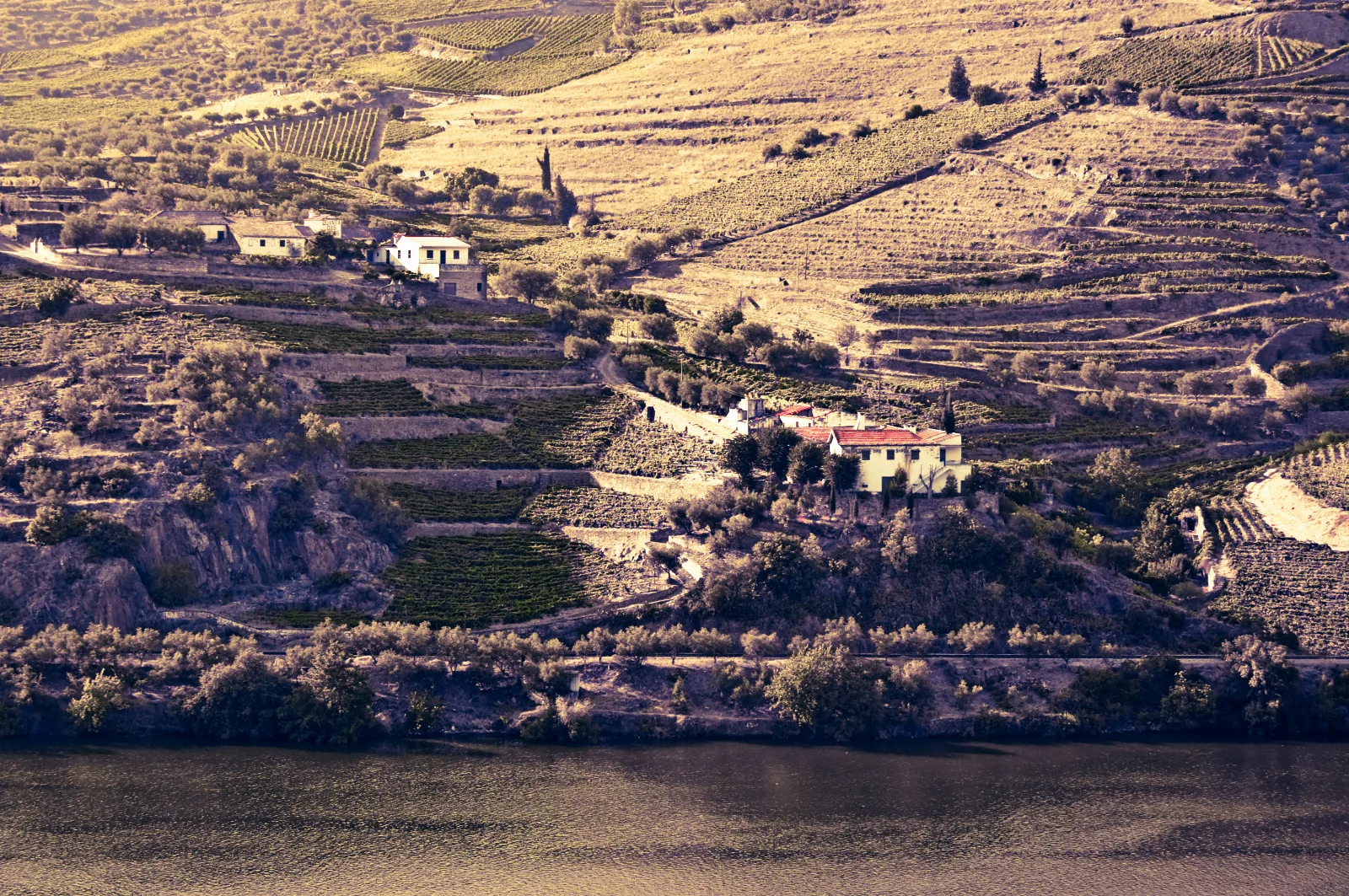
Photo: Edgar Jiménez · CC BY-SA 2.0 · source
Douro as a UNESCO World Heritage Site: What It Means and What It Covers
· Team Douro Vinhateiro
The Alto Douro Wine Region was inscribed on the UNESCO World Heritage List in 2001 as a living, evolving cultural landscape under criteria iii, iv and v. It covers 24,629 hectares across 13 municipalities, only part of the Douro Demarcated Region, and protects the terraces, estates and villages that shaped the valley.
The Alto Douro Wine Region was inscribed on the UNESCO World Heritage List in 2001 as a living, evolving cultural landscape, under criteria (iii), (iv) and (v). The listed area is 24,629 hectares across 13 municipalities and protects a landscape of terraces, estates and villages built up over centuries. It is not the whole Douro, and it is not a park with a gate: it is a territory where people still live and make wine.
What does World Heritage status mean in practice?
UNESCO adopted the World Heritage Convention in 1972 to ensure the identification, protection and transmission to future generations of cultural and natural heritage of “Outstanding Universal Value”. The cultural landscape category only arrived in 1992, to recognise what results from the combined work of people and nature. The Alto Douro is listed as an evolving, living cultural landscape: one that keeps an active role in society and keeps changing, because the vine remains the region's main economic backbone.
For a visitor this has a practical consequence you notice quickly. There is no ticket office at the entrance to the valley. What is listed are the attributes of a territory: the river, the slopes, the schist walls, the estates, the villages, the paths. You see the heritage by driving the road, stopping at a viewpoint or walking into a village, not by passing a turnstile.
What area is actually listed?
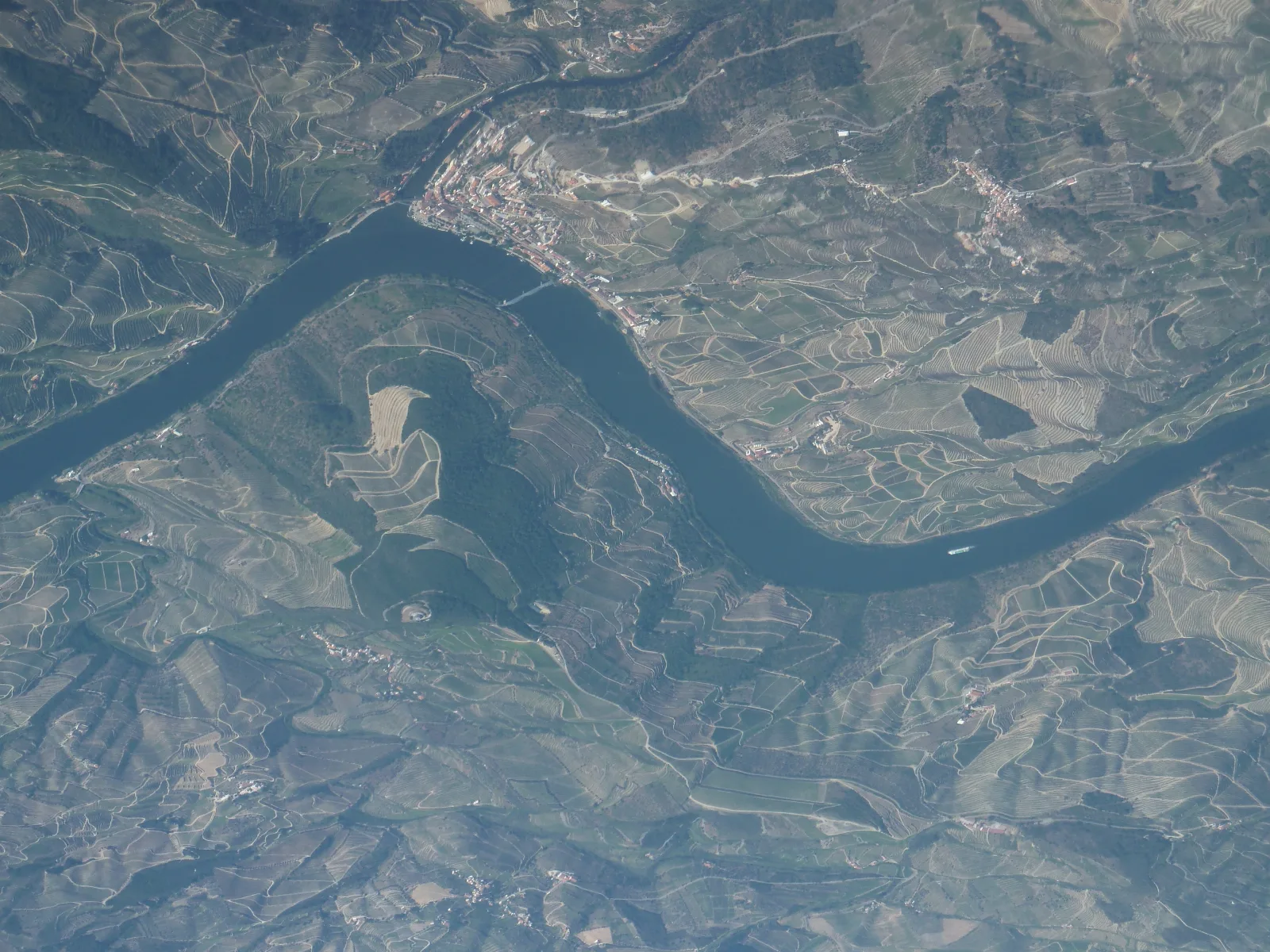
This is one of the most misunderstood points. The Douro Demarcated Region covers about 250,000 hectares; the area inscribed as World Heritage is 24,629 hectares across 13 municipalities, and the rest of the region works as a buffer zone. The axis is the Douro river, fed by the Varosa, Corgo, Távora, Torto and Pinhão. Saying “the Douro” is World Heritage is therefore a simplification: the listed core is in the Alto Douro, where terraced vineyard landscape is at its most characteristic. For an overview of the region before choosing where to go, our complete guide to the Douro Vinhateiro is a good starting point.
Why was the Alto Douro listed?
According to the Portuguese National Commission for UNESCO, the Alto Douro is a particularly representative part of the Douro Demarcated Region, the oldest regulated wine region in the world. The landscape combines the monumental nature of the valley, with steep slopes and poor soils, with the ancestral and continuous action of people, who shaped the land into terraces to protect it from erosion and make vine growing possible. The same source notes that the region produces Port wine, the main driver of local culture, traditions and economy, and that people have settled here since Roman occupation.
Studies by Missão Douro (CCDR-N) add three components that set the site apart: the age of the region, the terraces and the crossing of cultures. The Pombaline demarcations of 1757 and 1761, following legislation from 1756, came with rules and a wine classification system, and Pombaline boundary markers still survive in the landscape. In many respects, that legislation anticipated modern wine regulation.
What do you see in the listed landscape?
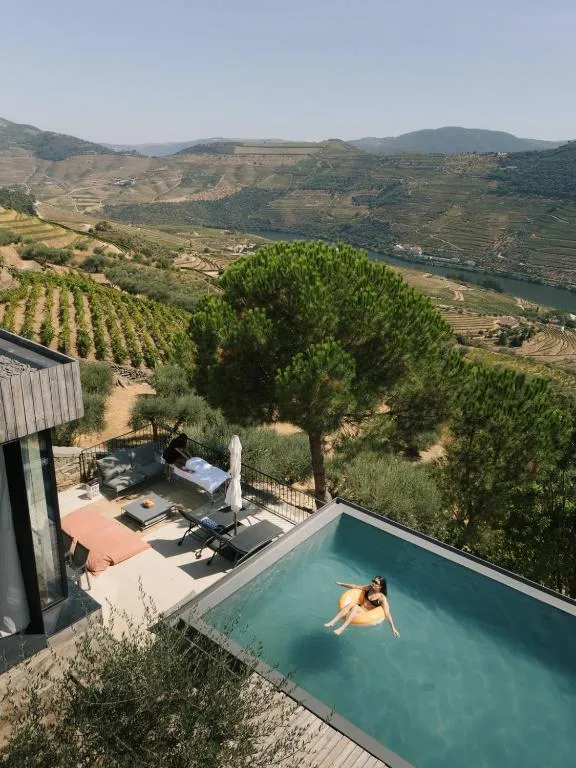
What makes the landscape exceptional, according to Missão Douro, is above all the work of anonymous people who, over centuries, shaped the ground and built structures to hold soil and retain water. As you travel the valley, look for these elements:
- Schist-walled terraces, both old (pre-phylloxera) and post-phylloxera;
- Patamares and vinha ao alto (vines planted straight up the slope), more recent ways of structuring the land, plus vines planted without any terracing;
- Walled paths, “salta-cão” stairs, cardenhos (small field shelters) and traditional drainage systems, built for practical reasons and now recognised as heritage;
- The mosaic of olive groves, almond trees, Mediterranean scrub and abandoned plots among the vines;
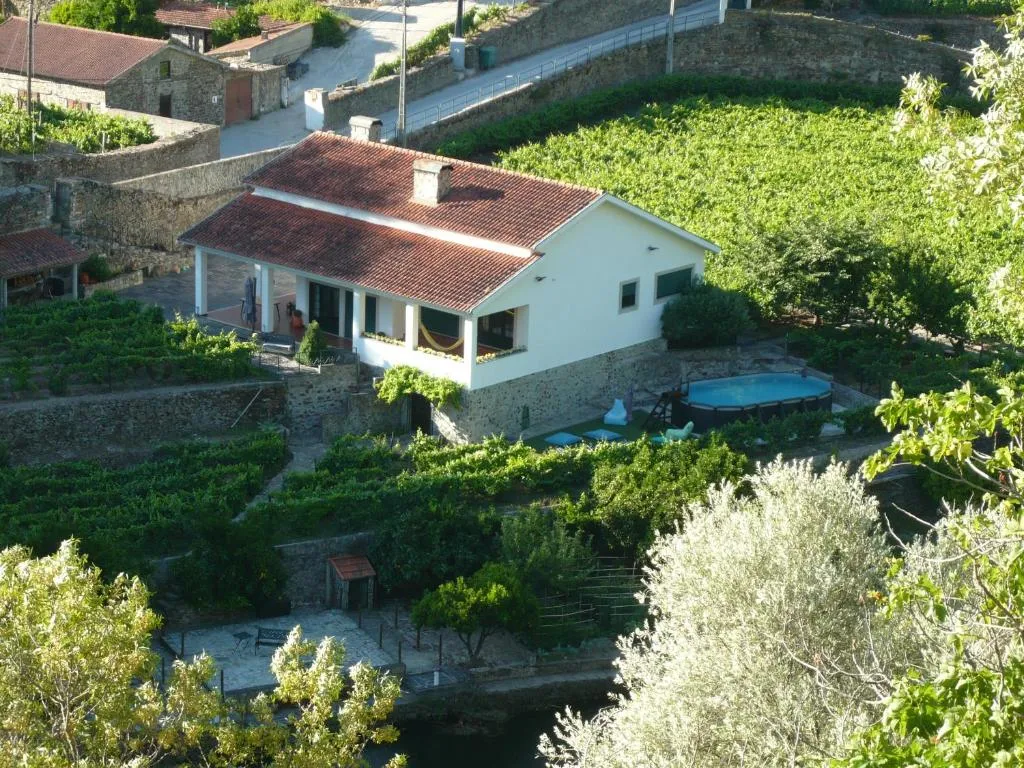
- Estates, hamlets, villages, places of worship, wine cellars, the railway and the navigable river itself.
The terraces are not only aesthetic: to grow vines on steep, stony slopes people had to make soil and hold the ground with walls. That is why a single valley shows techniques from different eras side by side.
Where can you read this landscape most clearly?
Viewpoints are the most direct way to grasp the scale. The São Leonardo de Galafura viewpoint is a good example of a place to read the valley as a whole. For the human and historical context, the Museu do Douro in Peso da Régua, and our article on the Régua wine museum, help link the terraces to the history of wine and the region. In Pinhão, in the heart of the listed area, the guide to Pinhão, capital of the Alto Douro Vinhateiro shows what to see and do in the village; if you want to sleep near the vines, The Vintage House is one of the options in the catalogue for Pinhão. For a more rural visit, see also the wine villages of the Douro.
If you visit in autumn, the guide to the Douro grape harvest explains how to coincide with work in the vineyard, which is a living part of what UNESCO listed.
Who looks after the Douro World Heritage Site?
The cultural landscape management system includes a managing body, Missão Douro, under the president of CCDR-N; a management plan, the Intermunicipal Land-Use Plan of the Alto Douro Vinhateiro; and a civil-society promoting association, the Liga dos Amigos do Douro Património Mundial. In 2013 a conservation assessment study was carried out by university specialists to check that the site's integrity and authenticity were being maintained and to set sustainable management guidelines. There is also a good-practice manual for viticulture, the SUVIDUR manual, focused on producing quality grapes with ecologically sound methods.
Is the status guaranteed forever?
No. Missão Douro itself stresses that listing is not an untouchable title: there are cases at the World Heritage Centre of sites entering the list of sites in danger. Preserving a living landscape also means reconciling the upkeep of traditional elements with efficient solutions in the vineyard, housing, tourism and wine cellars. In practice, visitors help most by respecting walls, paths and farmland, staying on permitted access routes and checking before visiting private properties.
How should you prepare a visit?
Think of the trip as reading a landscape, not ticking off monuments. Leave time to drive slowly, stop at high points and visit at least one estate or museum to give context to what you see. Opening times, visiting conditions and any bookings depend on each estate, museum or municipality, so always check at source before going. For official information on the status and management of the site, consult the page of the Portuguese National Commission for UNESCO and the Missão Douro (CCDR-N) documents listed in this article's sources.
Frequently asked questions
When did UNESCO list the Douro?
The Alto Douro Wine Region was inscribed on the World Heritage List in 2001, under criteria (iii), (iv) and (v), according to the Portuguese National Commission for UNESCO.
Is the whole Douro a World Heritage Site?
No. The listed area is 24,629 hectares across 13 municipalities, only part of the Douro Demarcated Region, which covers about 250,000 hectares. The rest of the region acts as a buffer zone.
What kind of heritage is the Alto Douro Wine Region?
A living, evolving cultural landscape: a landscape shaped by human work that is still farmed and still changing, rather than a monument frozen in time.
Do I need a ticket to visit the Douro World Heritage Site?
The listing covers an inhabited, working territory, not an enclosed site. Terraces, viewpoints, villages and estates are visited through their own access; for estates and museums, check opening times and conditions with each one.
Can the listing be withdrawn?
According to Missão Douro (CCDR-N), the status is not an untouchable or permanent title: the World Heritage Centre has cases of sites moving to the list of sites in danger. That is why management and conservation matter.
Sources consulted
- unescoportugal.mne.gov.pt/pt/temas/proteger-o-nosso-patrimonio-e-promover-a-criatividade/patrimonio-mundial-em-portugal/alto-douro-vinhateiro
- ccdr-n.pt/sites/default/files/ficheiros_ccdrn/missaodouro/significado_paisagemcultural_valor_da_chancela_unesco.pdf
- pasosonline.org/Publicados/10112/PS0112_01.pdf