Photo: Pedro (Wikimedia Commons) · CC BY 2.0 · source
Miranda do Douro and the International Douro: what to see
27 Sep 2026
In Miranda do Douro, see the ruined castle and the cathedral, take the river cruise on the International Douro, and keep a second day for the Fraga do Puio viewpoint in Picote and for Sendim, where Mirandese is spoken. The Pauliteiros dance at the municipality's traditional festivals, so confirm dates with the town hall. You need a car to reach the natural park's viewpoints.
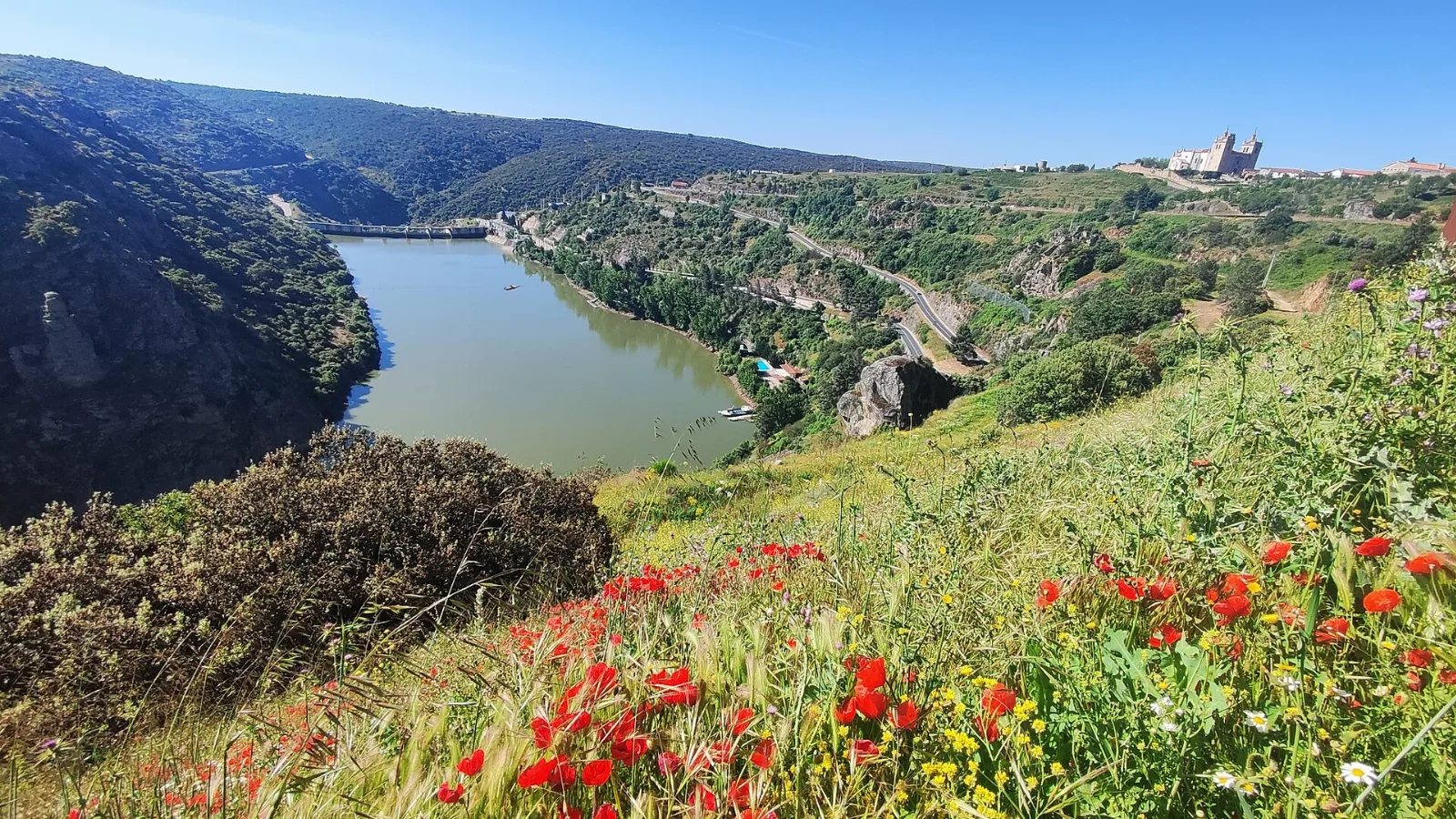
Miranda do Douro is the natural starting point for exploring the stretch of the Douro that forms the border with Spain, in north-eastern Trás-os-Montes. Here the river runs deep between cliffs inside the Douro Internacional Natural Park, and the town combines old walls, a co-cathedral, a language of its own, Mirandese, and a stick dance. This guide is for anyone who wants to know what to see and in what order, based on official sources and our own pages on the places. For an overview of the municipality and accommodation, see also our guide to Miranda do Douro.
Castle, cathedral and the historic centre
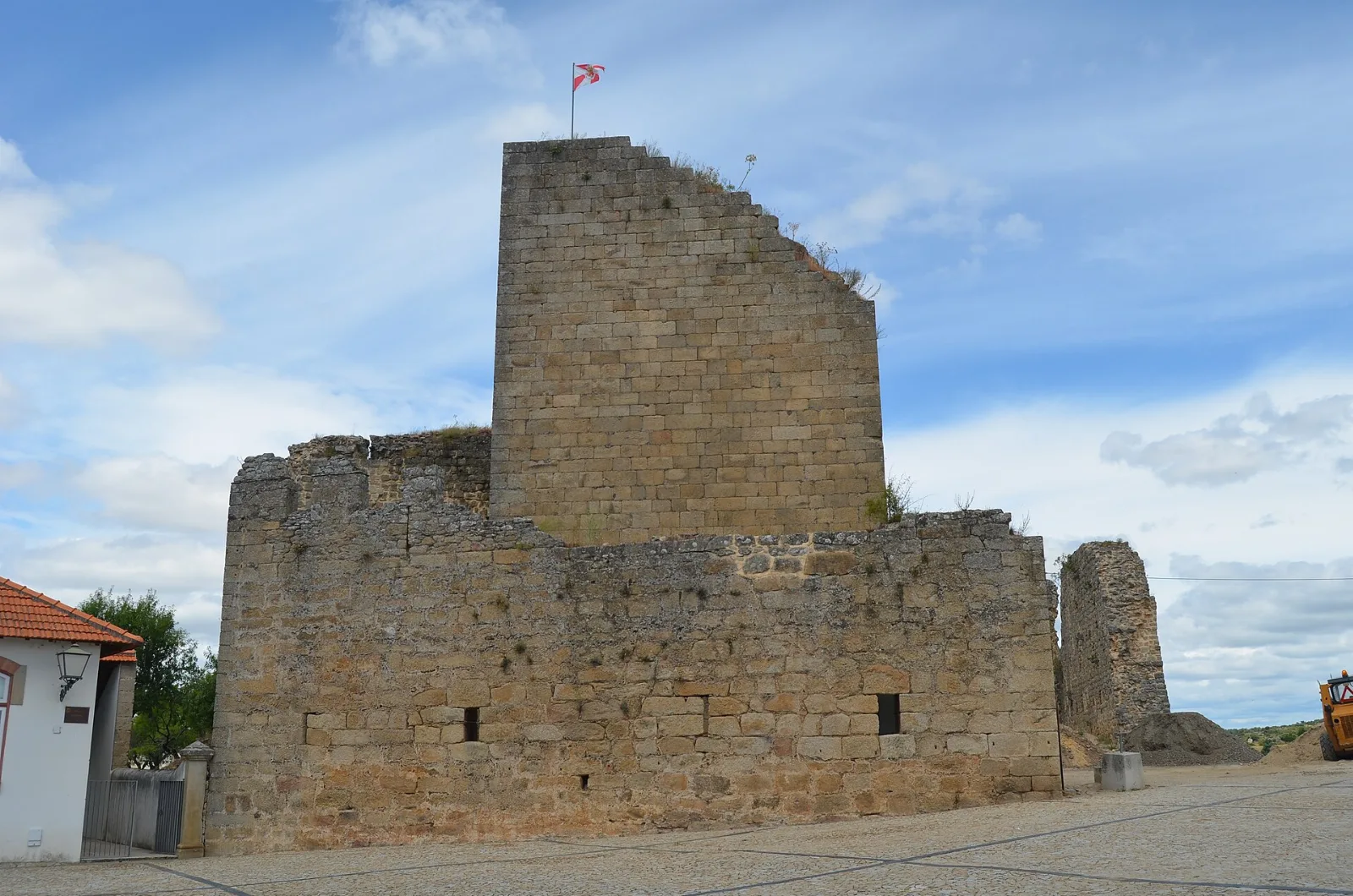
The logical first stop is the Castle of Miranda do Douro, the old fortress that guarded this border area. According to the municipality, King Dinis granted Miranda a new charter in 1286 and began work on the castle; the settlement became a city in 1545. Today mostly stretches of wall and traces of the fortification remain, because in May 1762, during the Seven Years' War, the powder magazine exploded while the fortress was holding out against Spanish troops. Sources speak of several hundred deaths and disagree about the cause of the blast, so we keep to the essentials.
The municipality describes the keep, the Portas da Senhora do Amparo and the Portas de Santo António, and a central well with 72 steps. In 2024 eight QR-code panels were installed at the castle and along the wall, with on-site text in Portuguese and Mirandese and digital content in Portuguese, Mirandese, Spanish and English.
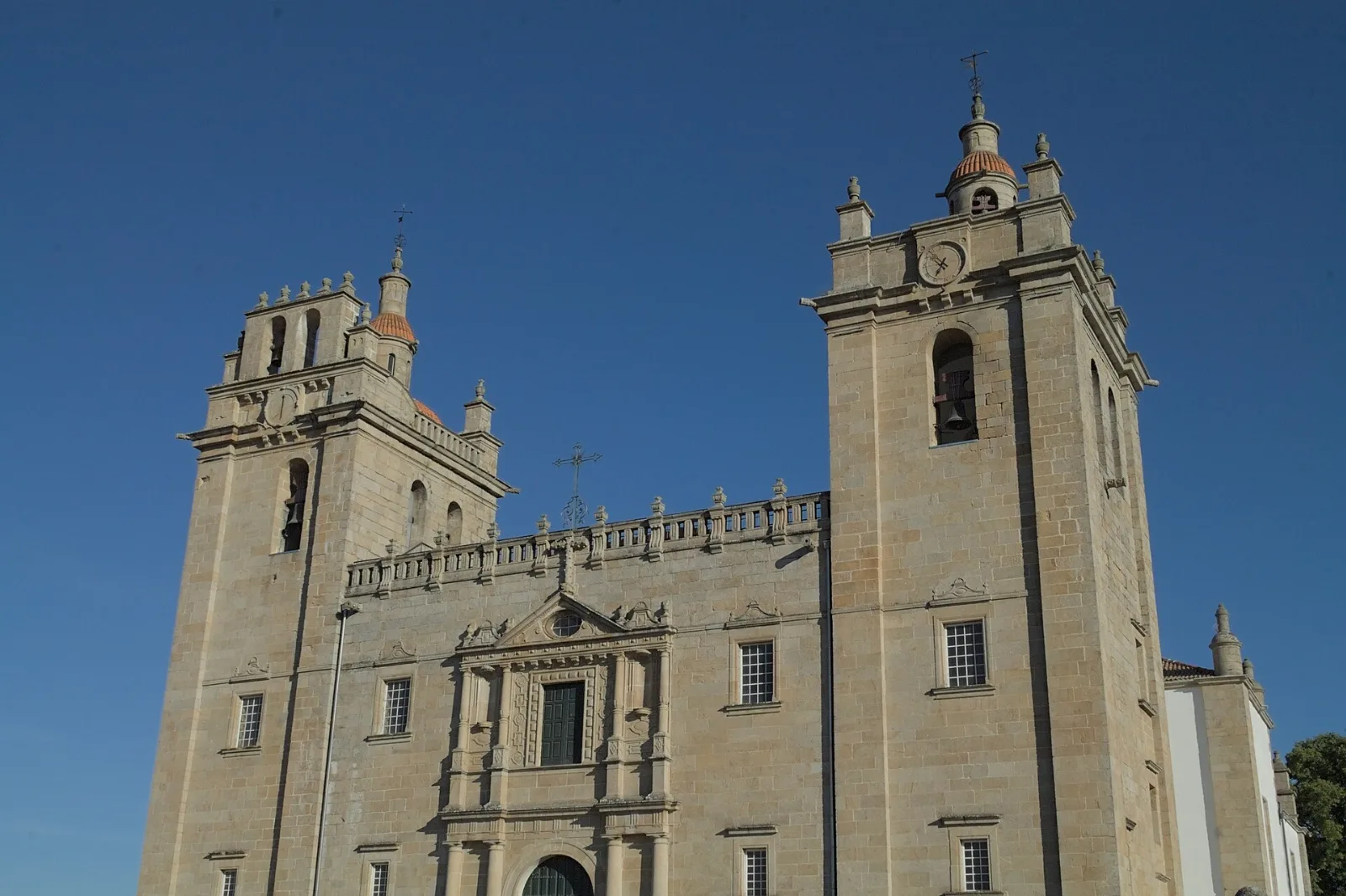
In the historic centre stands the cathedral (Sé), a Mannerist building begun in 1552, a National Monument since 1910 and today a co-cathedral. It houses the Menino Jesus da Cartolinha, an 18th-century image with an annual feast on 6 January; the story of the child said to have appeared on the walls in 1711 is oral tradition, not a documented fact. The Património Cultural page also highlights the twelve "Portraits of the Months" panels, painted in Antwerp around 1580 in the workshop of Pieter Balten.
The Museu da Terra de Miranda, in Praça D. João III, brings together ethnography, archaeology and evidence of the language and pastoral life. When we checked, its official page said the museum was closed for renovation works, and other sources describe it as temporarily housed elsewhere: confirm before counting on it. The Tourist Office is in Largo do Menino Jesus da Cartolinha (telephone 273 430 025) and, according to the municipality's website, is open Monday to Saturday, with longer hours from May to September.
The river, the dam and the cruise
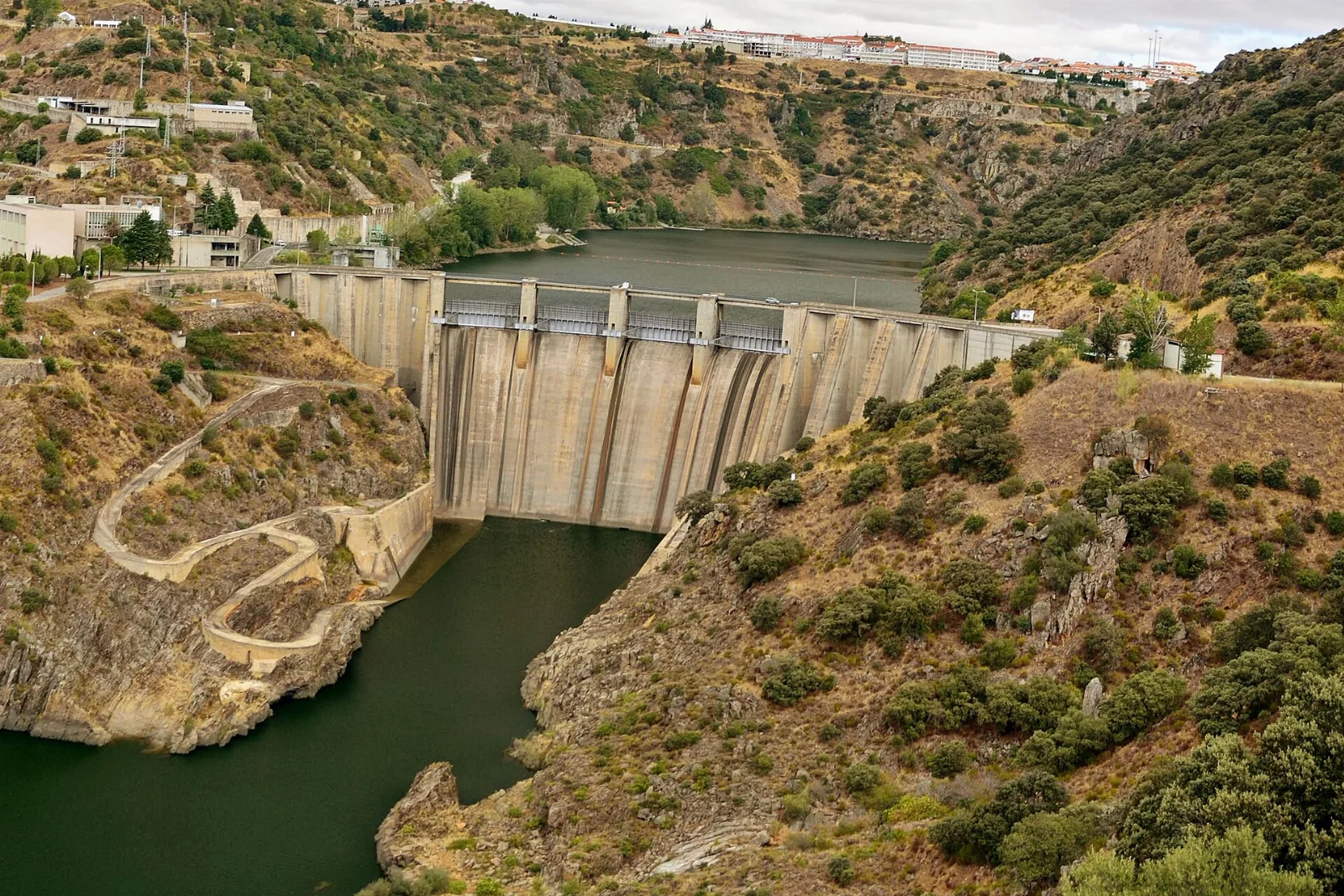
The Miranda do Douro Dam stands very close to the town, on the stretch where the Douro marks the border. It is a concrete buttress dam, 80 m high and about 263 m long, linking the Portuguese bank with Torregamones, in the province of Zamora. Work began in 1955 and finished in the early 1960s (sources give 1960 or 1961). Upstream is the Spanish Castro dam and downstream the Picote dam. We found no official information about visits to the interior, so we treat it as a viewpoint stop and as a landmark on the cruise route.
The environmental cruise leaves from the Parque Náutico de Miranda do Douro, beside the river dock. The boat has 120 seats and a glass roof. Roteiro do Douro describes an outing of about an hour and a half, with one hour on the water and half an hour of birds-of-prey demonstration, commentary in Portuguese and Spanish, and advance online booking. Birds that may be seen include griffon vultures, Egyptian vultures and, occasionally, the black stork, with no guarantee of sightings. Times vary through the year.
The cruise is a good way to grasp the setting: the Douro Internacional Natural Park was created on 11 May 1998, covers about 85,000 hectares and spans the municipalities of Miranda do Douro, Mogadouro, Freixo de Espada à Cinta and Figueira de Castelo Rodrigo.
Viewpoints: from Fraga do Puio to the cliffs
Miranda do Douro's municipality lists 16 viewpoints. The best known is the Fraga do Puio viewpoint, in the village of Picote, inside the natural park. The municipal page gives an altitude of 610 metres and describes the Douro running deeper below the dam; Rota Terra Fria mentions a view over two deep stretches of the river, with olive terraces on the slopes.
A fire in August 2017 destroyed the original viewpoint. The rebuilding, led by the town hall, ICNF and EDP, produced a wood, steel and glass structure with a suspended glass platform that takes visitors out above the cliffs; the regional press also mentions the reforestation of 20 hectares. It can be reached from Picote, with signposting.
If you have time for more, the municipality also lists the São João das Arribas, Castrilhouço, Freixiosa and Penha das Torres viewpoints. A travel guide describes the São João das Arribas walk as 3.2 km and easy, ending at a chapel above the river gorge; one itinerary warns that Castrilhouço has unprotected edges. Elsewhere in the park, further south, our article on the Penedo Durão viewpoint covers bird-watching, and the three-day itineraries we consulted place it near Freixo de Espada à Cinta, so treat it as a separate trip.
Sendim, the Pauliteiros and the Mirandese table
Sendim, the "Capital of the Cliffs", is about 23 km from Miranda, according to Rota da Terra Fria. It became a vila in 1989, had 1,366 inhabitants in 2011, and people speak Sendinês, a variant of Mirandese, a language recognised by law in 1999. The Sendim Interceltic Festival has been held since 1999 on the first weekend of August and the Festas de Santa Bárbara on the second; dates should be confirmed locally. Heritage includes the Igreja Matriz and the Eremitério Os Santos, with 16th-century frescoes.
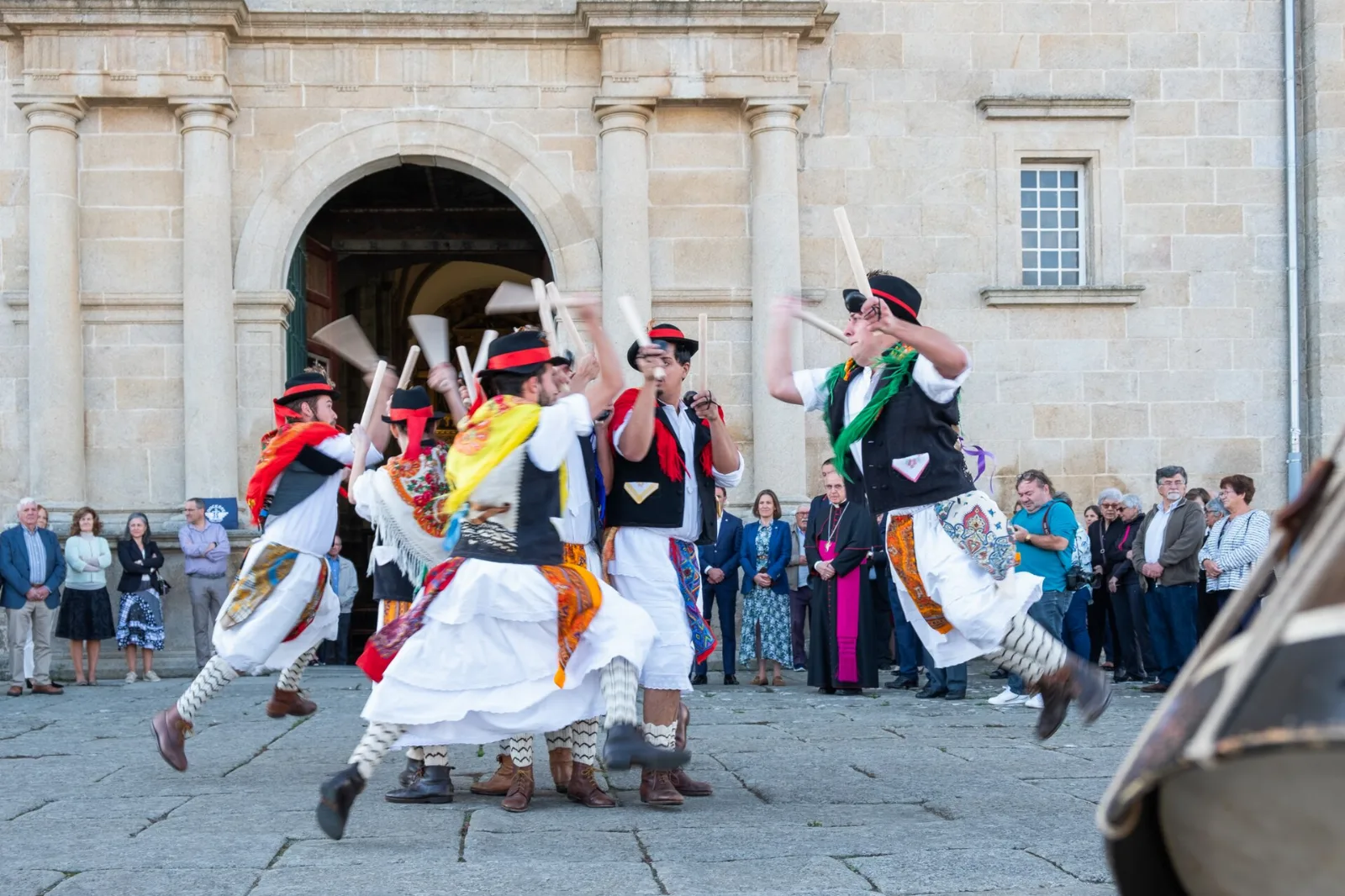
The Pauliteiros dance is the tradition that most identifies the area: a stick dance, traditionally performed by groups of eight to the sound of bagpipes, snare drum and bass drum, with a repertoire called "lhaços". In 2025 the "Ritual Dances of the Pauliteiros at the Traditional Festivals of Miranda do Douro" were entered in the National Inventory of Intangible Cultural Heritage. They are seen mainly at the municipality's traditional festivals, such as the Festa dos Moços in Constantim and the Santa Bárbara festivities; a travel guide also mentions performances on Saturday afternoons in July. Ask the town hall for the programme, because dates change.
At the table, the municipality highlights Posta à Mirandesa PDO and Cordeiro Mirandês PDO, along with smoked meats and the Mirandese sweet bread; Wikipedia adds tabafeia. The posta is associated with Sendim and with Ti Gabrila, who is credited with creating it. The Cooperativa Agrícola Ribadouro makes wines there under the name Pauliteiros.
How to organise the visit
For two days, we suggest splitting by area. On the first, stay in town: castle and walls in the morning, then the cathedral and Tourist Office, and the cruise late in the day if there is a departure. On the second, head south to Picote and Fraga do Puio, and continue to Sendim for lunch and a stroll. A travel guide recommends two to three days in the municipality; if you want more viewpoints, a third day gives you room.
A car is practically essential. According to Wikipedia, the main road routes into the municipality are the IC5, EN221 and EN218. An International Douro itinerary says that without a car it is almost impossible to see the park, and notes that many viewpoints are on dirt roads. It recommends spring and autumn, with summer hot and winter very cold.
For sleeping, our catalogue has 16 places in the municipality, 15 of them in the town of Miranda do Douro, and there are also options in Sendim. The ratings on those pages come from guests on Booking.com. At the viewpoints, keep away from cliff edges, especially where there is no fence.
What to confirm before you go
- Cruise times and bookings, with the operator.
- Status of the Museu da Terra de Miranda and opening times of the cathedral and castle, with the Tourist Office (273 430 025).
- Dates of the Interceltic Festival, the Santa Bárbara festivities and Pauliteiros performances, with the town hall.
- Condition of the dirt roads to the viewpoints, and the weather.
- Accommodation in Miranda do Douro or Sendim, especially in August.
Frequently asked questions
How many days do I need for Miranda do Douro and the International Douro?
A travel guide recommends two to three days. Two days cover the town and the cruise on one day and Picote and Sendim on the other; more viewpoints call for a third day.
Where is the Fraga do Puio viewpoint?
In the village of Picote, in the municipality of Miranda do Douro, inside the Douro Internacional Natural Park. The municipal page gives an altitude of 610 metres. It was rebuilt after the August 2017 fire and includes a glass platform.
How does the International Douro cruise work?
It leaves from the Parque Náutico de Miranda do Douro on a glass-roofed boat with 120 seats. According to Roteiro do Douro it lasts about an hour and a half and includes a birds-of-prey demonstration. Book and confirm times with the operator.
Who are the Pauliteiros and where can I see them?
Groups that dance with sticks, traditionally eight men, to bagpipes, snare drum and bass drum. They perform at the municipality's traditional festivals, such as those of Constantim and Santa Bárbara; confirm dates with the town hall.
Do I need a car to visit the International Douro?
In practice, yes. The itineraries we consulted consider it almost impossible to see the viewpoints without your own vehicle, and many are on dirt roads. The main routes into the municipality are the IC5, EN221 and EN218.
What should I taste in Miranda do Douro?
The municipality highlights Posta à Mirandesa PDO and Cordeiro Mirandês PDO, plus smoked meats and Mirandese sweet bread. Wikipedia adds tabafeia.
Sources consulted
- pt.wikipedia.org/wiki/Miranda_do_Douro
- en.wikipedia.org/wiki/Miranda_do_Douro
- pt.wikipedia.org/wiki/Parque_Natural_do_Douro_Internacional
- en.wikipedia.org/wiki/Douro_International_Natural_Park
- en.wikipedia.org/wiki/Miranda_Dam
- pt.wikipedia.org/wiki/Sendim_(Miranda_do_Douro)
- pt.wikipedia.org/wiki/Pauliteiros_de_Miranda
- cm-mdouro.pt/conhecer/o-que-ver/miradouros
- cm-mdouro.pt/conhecer/posto-de-turismo
- museuterrademiranda.gov.pt/museu/
- museuterrademiranda.gov.pt/museu/horario-bilhetica/
- museuterrademiranda.gov.pt/concatedral/menino-jesus-cartolinha/
- loja.patrimoniocultural.gov.pt/en/patrimonio/miranda-cathedral/
- roteirododouro.com/roteiros/cruzeiro-miranda-do-douro
- terrasdetrasosmontes.pt/ver-e-fazer/atividades/passeios-de-barco/geo_artigo/cruzeiro-ambiental-e-centro-ambiental-hispano-luso
- saberviajar.pt/visitar-miranda-do-douro/
- viveromundo.org/o-que-visitar-no-douro-internacional/
- diariodetrasosmontes.com/noticia/miradouro-da-fraga-do-puio-em-picote-recuperado-apos-incendio
- rotaterrafria.com/geo_artigo-49/miradouro-da-fraga-do-puio
- dourovinhateiro.com/local/castelo-de-miranda-do-douro
- dourovinhateiro.com/local/barragem-de-miranda-do-douro
- dourovinhateiro.com/local/miradouro-do-fraga-do-puio
- dourovinhateiro.com/local/aldeia-de-sendim
- dourovinhateiro.com/local/danca-dos-pauliteiros
- dourovinhateiro.com/cidade/miranda-do-douro