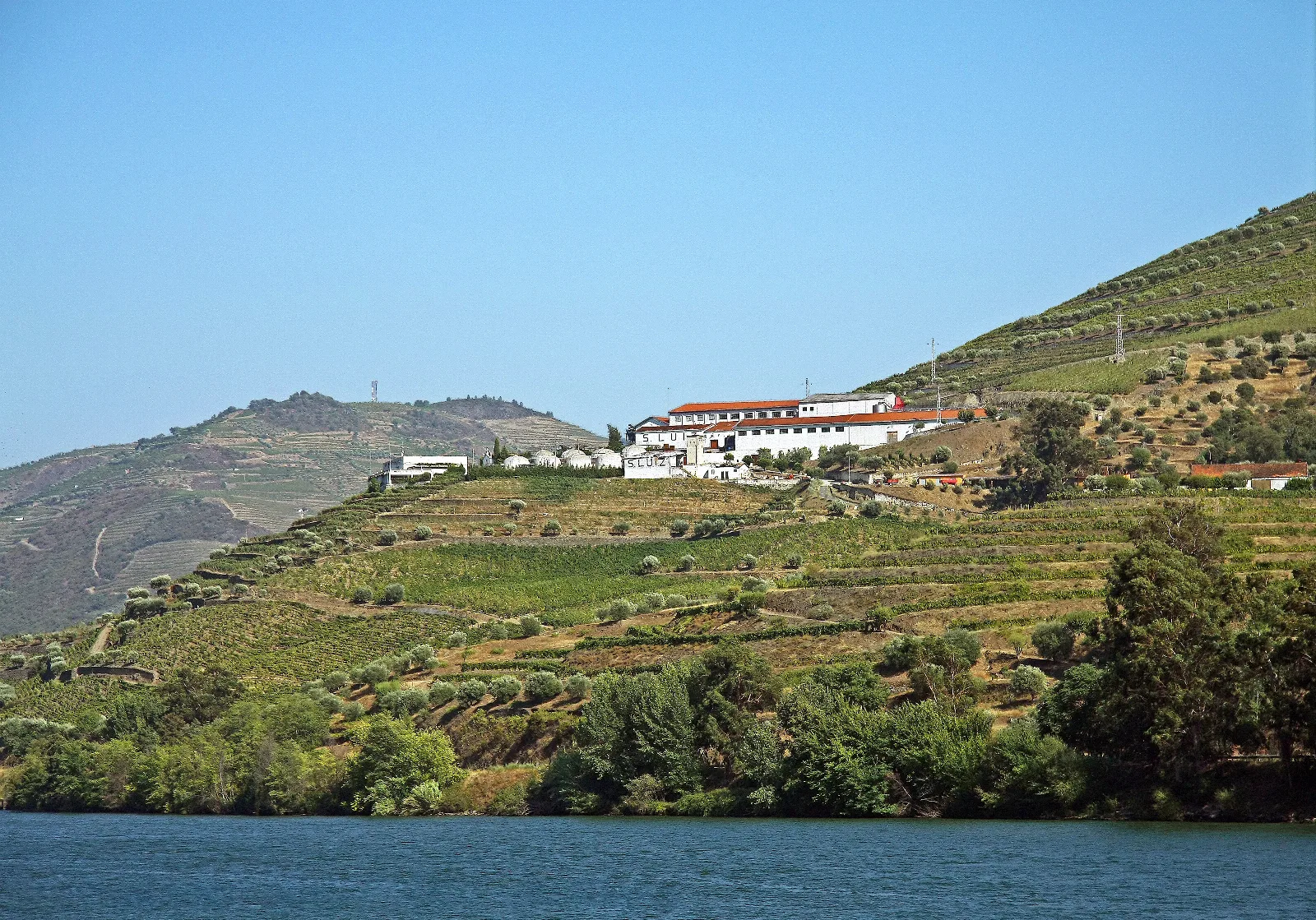
Photo: Sanjorgepinho · CC BY-SA 4.0 · source
Douro Harvest: How Lagares and Foot Treading Work
· Team Douro Vinhateiro
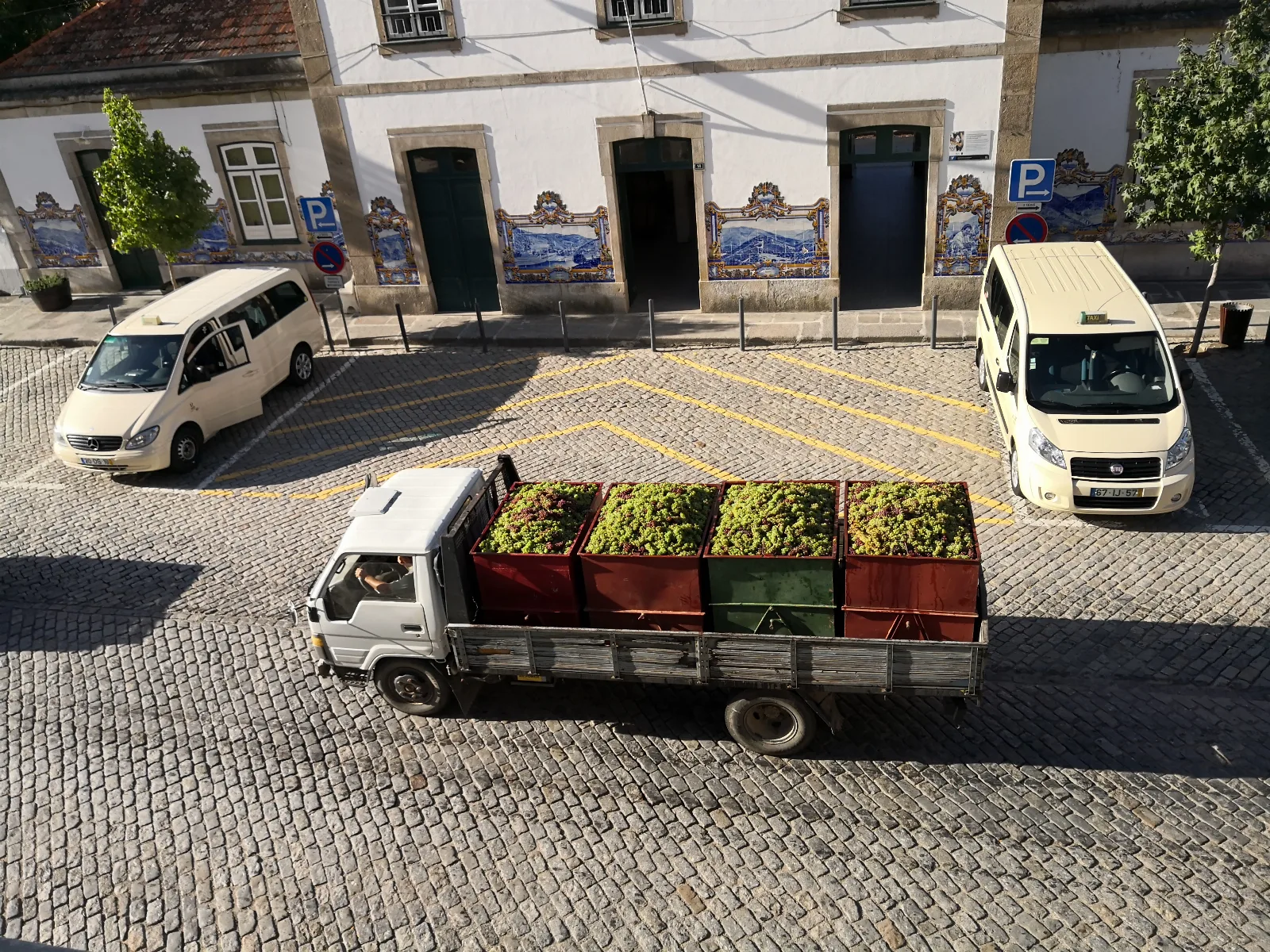
The Douro harvest runs from late August to October, whites first and reds after. Some grapes are still trodden by foot in lagares, shallow granite tanks where treading extracts colour and starts fermentation. Dates shift every year with the weather, so confirm them with each estate before planning.
The Douro harvest runs from late August to October, and its best-known image, foot treading in granite lagares, is still alive on the estates that keep it. This guide explains how the process works, why people tread by foot, what happens to the grapes afterwards and how you can watch or try the tradition, without promising dates that only each estate can confirm.
When does the harvest take place in the Douro?
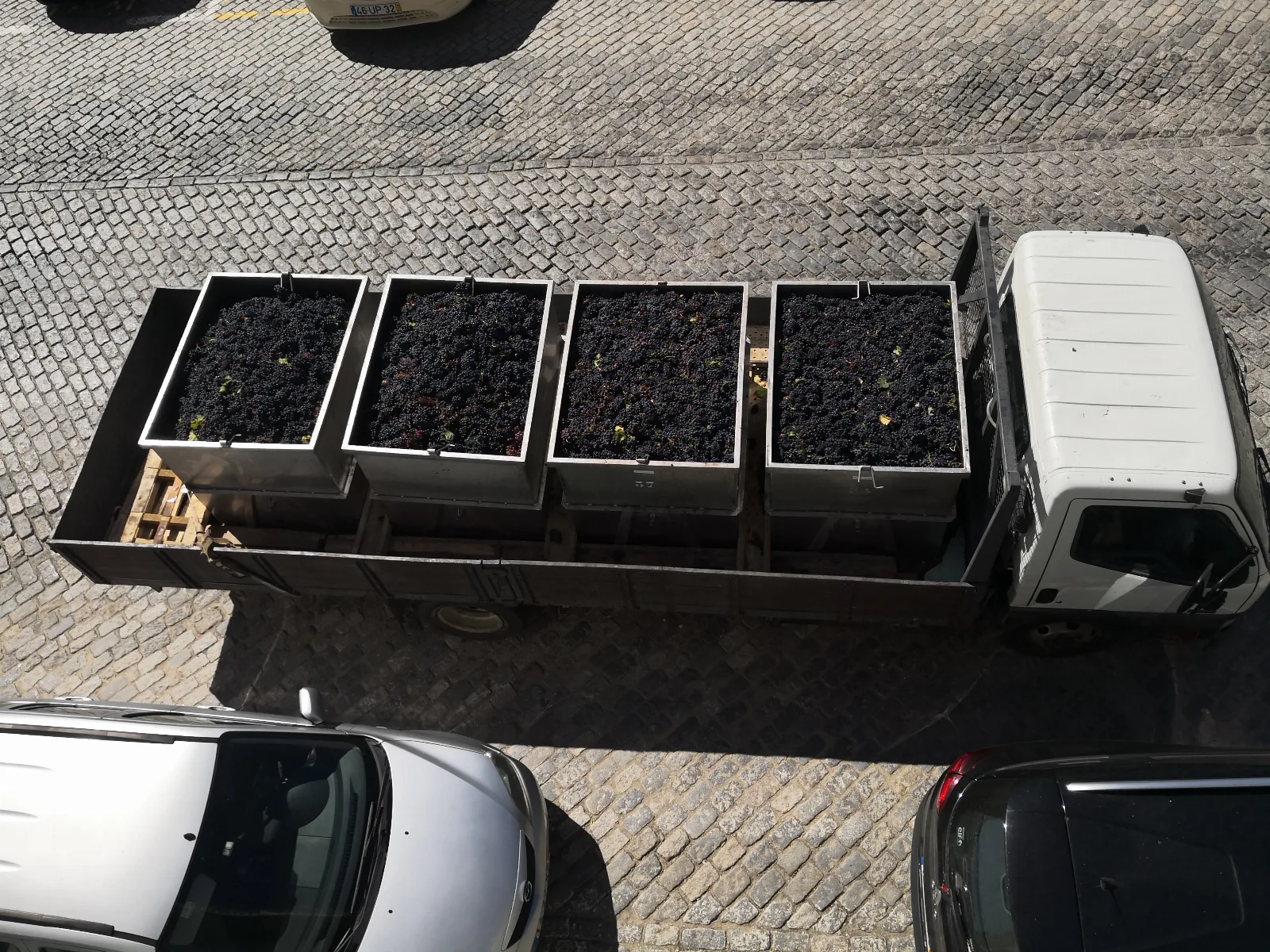
There is no single date. Steep slopes, microclimates and many grape varieties spread picking over almost three months, and dates move every year with the weather. According to a regional wine-tourism guide, the white varieties (Rabigato, Viosinho, Gouveio, Malvasia Fina) come in first, from late August to early September, while the reds (Touriga Nacional, Touriga Franca, Tinta Roriz, Tinta Barroca) peak from mid-September to early October. Late-harvest plots can stretch into November.
The order has a simple logic: whites are picked early to keep their acidity, while thick-skinned reds wait for full ripeness. To understand what each variety gives the wine, read our guide to Douro grape varieties. If you prefer the September calendar as an itinerary, we have a Douro harvest itinerary.
What is a lagar and how are grapes trodden?
A lagar is a shallow tank, traditionally made of granite, where freshly picked grapes are crushed. The same source says a working lagar takes between 2 and 4 tonnes of grapes and needs 20 to 30 people treading together. Sessions open to visitors are usually described in two stages: first the rhythmic work, with people in rows, arms linked, following whoever leads; then a looser stage with music and dancing in the must, until the winemaker is happy with the mass.
You can also picture what it feels like. At the start the grapes are firm and fresh; after about twenty minutes the must reaches the ankles; after an hour the essential work is done. It is real physical effort, comparable to a brisk walk on a slippery floor, and many people feel it in their legs the next day.
Why do producers still tread by foot?
Producers who keep the technique, especially for top wines, give three reasons: feet crush the grapes without breaking the seeds, which are bitter; they extract colour from the skins evenly; and they warm the must enough to start fermentation naturally. It is worth remembering that not all Douro wine is trodden by foot. Many cellars use modern equipment, and traditional treading coexists with it. When you visit an estate, ask which part of the production still goes through the lagar rather than assuming everything does.
What happens after the treading?
The must ferments and the grape sugar turns into alcohol. In Port, fermentation is stopped part-way by adding aguardente, a neutral grape spirit, which leaves residual sugar and lifts alcohol to around 19 to 22 percent. That interruption is what separates Port from a Douro table red. To learn about the styles this produces, read our piece on Port wine styles: ruby, tawny, vintage, LBV and colheita.
Can I watch or try foot treading?
Yes, with some planning. Some estates run treading for visitors during the harvest, normally by reservation, and many require a minimum age of 18; some offer family sessions with grape juice. It is not suitable with pregnancy, heart problems, open foot wounds or serious balance issues. Before booking, confirm everything directly with the estate, including dates and conditions. Our article on how to take part in the harvest and what to expect will help you choose.
What to bring and how to behave:
- old or disposable clothes, because grape juice stains permanently;
- a towel, a full change of clothes and a bag for wet clothing;
- hair tied back and jewellery off: whatever falls in the must is lost;
- enter barefoot and without creams on your feet, which taint the wine;
- ask permission before photographing people at work.
Even without treading, there are ways to see the tradition. Local harvest events include lagaradas and festivals: check the page for the XIV Lagarada Tradicional de Celeirós do Douro and the Festa das Vindimas at Casa de Mateus to see what the organiser announces. According to the same guide, towns such as Peso da Régua and Pinhão hold harvest festivals through the season. Some producers also include the lagares in guided estate visits the rest of the year, as Quinta da Roêda (Croft) states on its visits page.
What is left of the harvest in November?
By November picking is practically over, the lagares rest and the must has become new wine. That is why Saint Martin's Day, on 11 November, is traditionally marked on estates with tastings and chestnut roasts. It is a calmer time to visit cellars and talk to the people who make the wine. If you want to sleep on an estate among vines, see for example Quinta do Vallado Wine Hotel, and start thinking about next year's harvest early, because experiences fill up weeks ahead.
In short: the Douro harvest is a calendar, not a date; foot treading is a real technique, still used by those who value it, and not only a show. To plan, rely on the official sources of each estate and each event, and treat any date published elsewhere as indicative.
Frequently asked questions
When does the Douro harvest start and end?
In a normal year it runs from late August to October, peaking in mid-September and early October. Exact dates change every year with the weather, and late-harvest plots can run into November.
What is a lagar?
A shallow tank, traditionally granite, where grapes are trodden. According to a wine-tourism guide we consulted, a working lagar holds 2 to 4 tonnes of grapes and needs 20 to 30 people.
Why tread by foot instead of using machines?
Producers who keep the practice say feet crush the grapes without breaking the bitter seeds, extract colour evenly from the skins, and warm the must enough to start fermentation naturally.
Can visitors take part in foot treading?
Some estates run treading sessions for visitors, usually by advance booking and often with a minimum age of 18. Always confirm conditions, times and availability with the estate directly.
What should I wear to tread grapes?
Old or disposable clothes, since grape juice stains permanently, plus a towel, a full change of clothes and a bag for the wet ones. You enter the lagar barefoot, without creams on your feet.