Douro River Cruise Guide 2026: One-Day Trip or Multi-Day Cruise?
19 Jul 2026
Ask anyone who has stood on a terrace above the Douro river at golden hour, and they will tell you the same thing: the valley looks even better from the water. A Douro river cruise is the one experience that ties together everything the region is famous for — terraced vineyards climbing the hillsides, whitewashed quintas, and a river that has carried Port wine to the sea for centuries. But the moment you start planning, you hit a fork in the road: do you book a short sightseeing cruise from Porto or Pinhão, or commit to a multi-day cruise ship that sails all the way to the Spanish border? Having watched hundreds of guests at Douro Vinhateiro wrestle with this exact question, we put together this practical, no-fluff comparison so you can pick the option that actually suits your trip, your budget, and your patience for suitcases.
What Makes the Douro River Cruise Experience Unique
The Douro is not just scenic — it is a working river with a genuine industrial and cultural history, which is part of what makes cruising it so different from a generic European river trip. The valley was demarcated as a wine region in 1756, one of the oldest regulated wine regions in the world, and the Alto Douro Wine Region has been a UNESCO World Heritage Site since 2001. Unlike the Rhine or the Danube, the Douro was tamed relatively recently: a series of dams and locks built mainly in the second half of the 20th century turned a once-treacherous river into a chain of calm, navigable reservoirs, which is exactly what allows today's cruise ships to sail comfortably between Porto and the Douro Superior.
From Wine Barrels to Panoramic Sightseeing
Long before tourism, the river had a very different job. Traditional rabelo boats — flat-bottomed, with a long steering oar and a single square sail — carried barrels of Port wine downstream from the quintas of the Douro to the ageing cellars in Vila Nova de Gaia. It was dangerous work; the unregulated river had violent rapids, and rabelo crews took real risks navigating it. Modern regulation of the trade dates back to 1792, and the boats remained in commercial use until the rapids were tamed by dam construction in the 20th century, with the last cargo voyages happening around the 1960s. Today, replica rabelo boats are mostly used for short tourist cruises rather than transporting wine, but the silhouette on the water is a direct link to that history.
One-Day Douro River Cruises: What to Expect
If you are based in Porto, short in time, or simply want a taste of the river without an overnight commitment, a one-day cruise is the easiest way in.
Short Porto Cruises (1-2 Hours)
The classic option is the "six bridges" cruise departing from Ribeira or Vila Nova de Gaia, a roughly 50-minute to 1-hour loop that passes under all six bridges connecting the two riverbanks, including the iconic Dom Luís I Bridge. Several operators also run 2-hour rabelo boat cruises further upriver, for example from Pinhão into the heart of the vineyard landscape. These short trips are inexpensive, need no advance planning beyond showing up at the pier, and are a good way to get your bearings before exploring further inland.
Full-Day Porto–Régua Cruises
A step up is the full-day cruise connecting Porto to Peso da Régua (or sometimes Pinhão), typically around 6 hours each way or offered as a one-way trip combined with a train or coach return. These itineraries usually include lunch on board, pass through the Carrapatelo lock — one of the deepest river locks in Europe — and give you a genuine sense of how the landscape changes as you move from the Baixo Corgo into the Cima Corgo sub-region. It is the best option if you want the scenery of a multi-day cruise but only have one day to spare, and it pairs naturally with a night or two staying in the valley afterwards.
Multi-Day Douro River Cruises: What to Expect
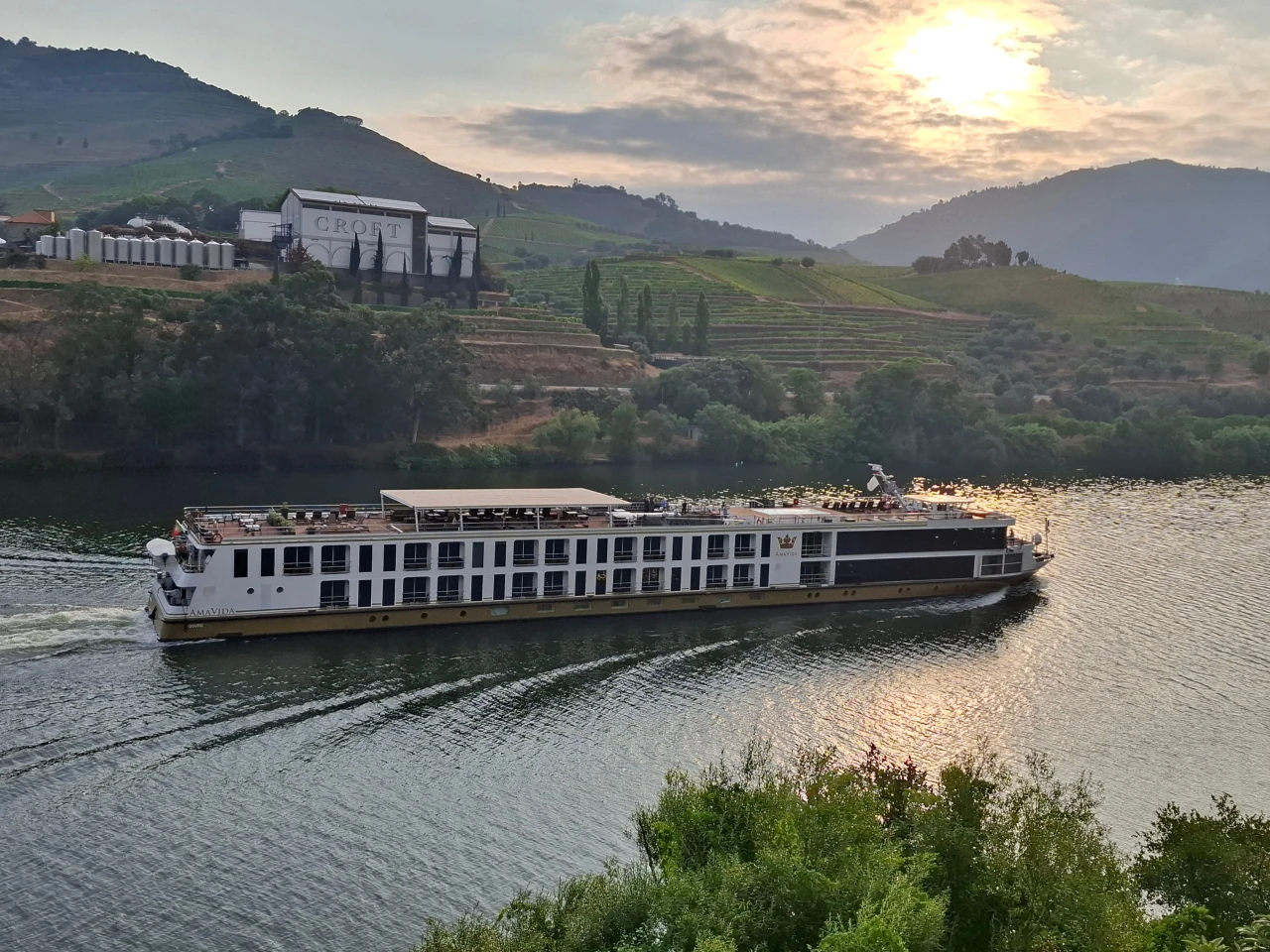
International operators such as Uniworld, Tauck, AmaWaterways, CroisiEurope and Riviera Travel run dedicated Douro itineraries, usually departing from and returning to Porto.
Typical Itineraries and Duration
Most multi-day Douro cruises run between 6 and 8 days, with some extended itineraries stretching to 11–14 days when combined with Porto and Lisbon stays before or after. A typical week includes stops in Régua, Pinhão and Barca d'Alva near the Spanish border, with shore excursions to quintas for Port and table wine tastings, visits to Amarante or Lamego, and sometimes a side trip to Salamanca. Because the ships are purpose-built for the river's locks and shallower draught, cabins tend to be smaller than on ocean cruises, but nearly all have a river-facing balcony or French balcony.
Onboard Experience and Price Range
Multi-day cruises are all-inclusive by design: full board with several set dinners, wine pairings, an onboard pool on many ships, and guided excursions bundled into the fare. Published prices for a week-long Douro cruise generally start in the low thousands of euros or dollars per person and can rise well beyond that for suite categories or peak-season sailings — expect meaningful variation depending on cabin type, season and how far in advance you book, so always check the operator's current rate sheet rather than relying on a single quoted figure. This is the option for travellers who want to unpack once, be looked after for a week, and see the full length of the valley without driving.
One-Day vs Multi-Day: How to Choose
There is no universally "better" option — it depends on what you are optimising for.
- Choose a one-day cruise if: you are based in Porto or already staying in the Douro Valley, want to keep costs low, have limited vacation days, or plan to explore the region independently by car, train or with a driver-guide.
- Choose a multi-day cruise if: you prefer not to drive at all, want a fully planned itinerary with meals and excursions included, are travelling as a couple or with family for a milestone trip, and are comfortable with a higher upfront cost in exchange for convenience.
- Consider a hybrid approach if: you want the best of both — a full-day cruise leg combined with several nights staying at a quinta or rural hotel in the valley, which gives you the river views without locking you into a fixed shipboard schedule.
In our experience hosting guests in the region, travellers who stay several nights in the Douro and add a single full-day cruise tend to get a richer picture of the valley than those who only see it from a ship's deck, simply because they also get to walk through a quinta's vineyards, eat dinner in a village restaurant, and watch the sunset from a hillside miradouro.
Best Time of Year for a Douro River Cruise
The river is navigable year-round thanks to the lock system, but the experience changes a lot by season. Spring (April–May) brings green terraces and wildflowers along the banks. Summer (June–August) is the busiest and hottest period — July and August regularly see afternoon temperatures climb well past 35°C inland, so shaded deck space and air-conditioned cabins matter more on multi-day ships, and short cruises are best taken in the morning or early evening. Early autumn (September–October) coincides with the grape harvest, when the terraces turn gold and copper and quintas are at their most active, making it arguably the most photogenic and atmospheric time to be on the water. Winter cruises are rarer and mostly limited to shorter regional sailings, since several long-haul operators pause Douro itineraries outside the main season.
Practical Tips for Booking Your Douro River Cruise
- Book multi-day cruises months ahead: the most popular sailing dates in September and October sell out early because of harvest-season demand.
- Check the departure pier: most short Porto cruises leave from Ribeira or Vila Nova de Gaia, a short walk from most central accommodation, but confirm the exact pier before you go.
- Pack for sun and wind: even short cruises spend most of the time on an open or partially covered deck, so bring sunscreen, a hat and a light layer for the breeze on the water.
- Combine transport with sightseeing: a one-way full-day cruise to Régua or Pinhão followed by a train back to Porto is a popular way to avoid backtracking — read our guide on visiting the Douro Valley without a car for the full range of train, cruise and tour combinations.
- Ask what is included: for multi-day cruises, confirm whether shore excursions, gratuities and drinks beyond the included wine are part of the fare before comparing prices between operators.
Frequently Asked Questions
How long is a typical Douro river cruise?
It depends on the type: short sightseeing cruises from Porto last around 1 hour, full-day cruises to Régua or Pinhão take roughly 6 hours, and international multi-day cruises typically run 6 to 8 days, occasionally extended to 11–14 days.
Is a Douro river cruise worth it?
For most travellers, yes — the valley's terraced landscape is genuinely best appreciated from the water, and even a single full-day cruise gives a strong sense of the region's scale that is hard to get purely by road.
Do I need to book a Douro cruise in advance?
Short one or two-hour cruises can often be booked on the day, especially outside peak summer weekends. Full-day and multi-day cruises, particularly during the September–October harvest season, should be booked weeks or months ahead.
What is the difference between a rabelo boat cruise and a river cruise ship?
A rabelo boat cruise is a short, open-air trip on a small traditional-style boat, ideal for a scenic hour or two. A river cruise ship is a much larger, hotel-style vessel used for multi-day itineraries with cabins, dining rooms and onboard entertainment.
Where do Douro river cruises depart from?
Most short cruises depart from Porto (Ribeira) or Vila Nova de Gaia, while many rabelo boat trips further inland depart from Pinhão. Multi-day international cruises almost always start and end in Porto.
Final Thoughts
Whether you choose an hour on a rabelo boat, a full day gliding up to Régua, or a week-long cruise ship itinerary to Barca d'Alva, the Douro rewards anyone willing to see it from the water at least once. If you are still shaping the rest of your trip, pair your cruise with time on land: check our guides on where to stay in the Douro Valley, what to do in Pinhão, and a full 3-day Douro Valley itinerary to build a trip around your cruise of choice. Ready to plan your stay in the valley? Browse Douro Vinhateiro for accommodation close to the river and start building your itinerary today.